DA conditions · Southport PDA
Southport PDA: Development Conditions and Plan Sealing
In the Southport Priority Development Area, approvals are issued by Economic Development Queensland, not by the City of Gold Coast.
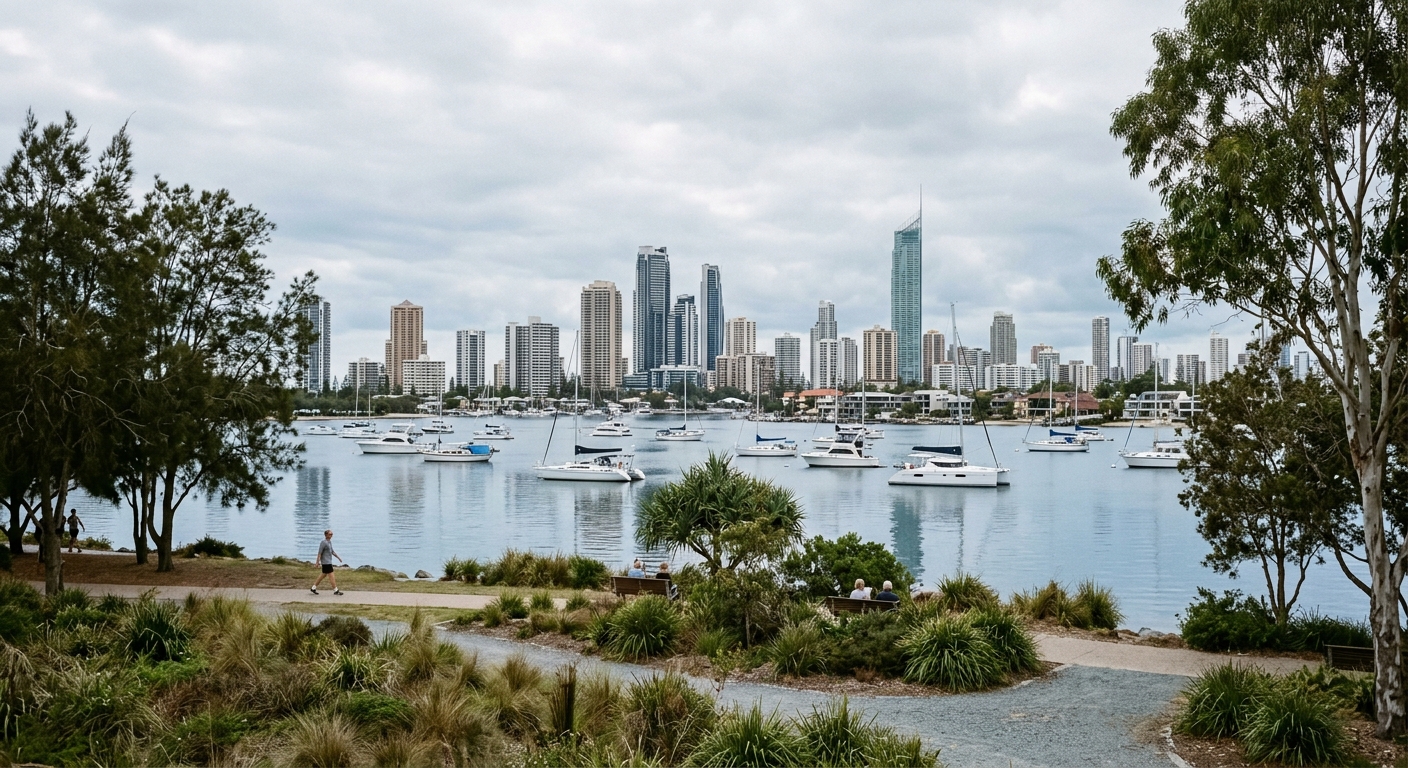
The Southport Priority Development Area (PDA) is a State-declared development area in the Gold Coast CBD. Inside its boundary, development is assessed and approved by Economic Development Queensland (EDQ) under the Economic Development Act 2012, not by the City of Gold Coast under the Planning Act 2016. For developers and surveyors used to standard council pathways, that difference changes who imposes conditions, which instrument governs them, and how a plan of subdivision gets approved and sealed.
Economic Development Queensland records that the Southport PDA was declared on 4 October 2013 and covers 198.3 hectares of the Southport CBD, with a vision to deliver the Gold Coast Central Business District. The Southport PDA Development Scheme, the regulatory document that controls development in the area, came into effect on 5 December 2014 and was last amended on 9 November 2021 by the Minister for Economic Development Queensland (MEDQ), according to the State Development submissions report for that amendment.
Whichever authority issues the approval, the outcome is the same: conditions must be satisfied and evidenced before a survey plan can be sealed and lots can settle. Managing that chain from approval to registered title is what separates projects that settle on time from those that stall.
How Southport PDA conditions are structured
In the Southport PDA, development permits and their conditions are decided by MEDQ under the Economic Development Act 2012, against the Southport PDA Development Scheme rather than the Gold Coast City Plan. A recent EDQ decision notice for a volumetric subdivision at Nexus Way, Southport records that the permit was decided pursuant to s.85(4)(b) of the Economic Development Act 2012 by the Minister for Economic Development Queensland, which shows the same statutory machinery applies to reconfiguring-a-lot approvals inside the PDA.
Infrastructure charging also runs on the PDA track. EDQ states that the Economic Development Act authorises MEDQ to set and levy infrastructure charges within a PDA, with the Infrastructure Funding Framework (IFF) serving as the primary policy document for charges in the Southport PDA. That is a different instrument from the City of Gold Coast Adopted Infrastructure Charges Resolution that governs land outside the PDA, so charge obligations must be read from the PDA framework, not the council schedule.
Southport PDA conditions typically cover the same real-world matters as a standard subdivision (access and road works, stormwater and drainage, utility connections, landscaping and open space, and staging), but they are drafted against the development scheme's precinct provisions. Where a project sits near or connects to State infrastructure, referral-style requirements can still attach, so the condition schedule needs to be read in full at approval rather than assumed from experience on council-assessed sites.

Where Southport PDA projects run into problems
The most common problem is treating a PDA approval like a council approval. Because MEDQ is the assessing authority and the Southport PDA Development Scheme is the governing instrument, teams that default to City Plan assumptions can misread which conditions apply, which body signs off compliance, and where evidence has to go. That confusion tends to surface late, when the plan sealing package is being assembled under settlement pressure.
Fragmentation across the project team is the second issue. Engineers, planners, and surveyors each hold part of the compliance picture, and on a multi-year CBD project that knowledge scatters as staff and consultants change. Conditions that were understood at approval become uncertain two years later. See fragmentation across project teams in plan sealing for how this plays out.
Infrastructure charge and staging conditions are a third pressure point. Because Southport PDA charges flow from the Infrastructure Funding Framework rather than a council resolution, the timing and amount of payments need to be tracked against the correct instrument for each stage. Getting that wrong holds up the sealing of individual stages.
Time savings from structured condition management
Structured condition management saves the most time at the front of the project, by turning a PDA approval into a live task list the day it is issued. When every Southport PDA condition is recorded, assigned, and tracked from approval, external sign-offs and certifications are started early enough to complete without urgency, rather than being discovered during plan sealing preparation.
There is a measured gap between the front and back of the pipeline that structured tracking closes. About 21 days is how quickly a typical City of Gold Coast DA decision is reached at the front of the pipeline (PlanEase data, 18 May 2026 to 14 August 2026), but the post-approval stage that follows, satisfying conditions, then plan sealing and title registration, is not measured or published anywhere.
According to PlanEase's own analysis of public Queensland council and Economic Development Queensland development-application registers, the City of Gold Coast recorded roughly 1,100 development applications over the period from 18 May 2026 to 14 August 2026, with a typical (median) time to decision of about 21 days. EDQ, as the State PDA authority, is tracked by application volume only and has no published decision-time figure. The point of contrast is simple: the approval is well measured, the months after it are not, and that is where structured tracking recovers time. Explore the underlying data on our Queensland development application insights page.
PlanEase analysis of public Queensland council and EDQ registers. EDQ, the PDA authority, is tracked by volume only.
Approximate figures from PlanEase's analysis of public registers, data updated 16 August 2026, subject to revision. Not official statistics.
Risk reduction for Southport PDA developments
The risk in a PDA project is the same settlement and finance exposure as any major subdivision, concentrated by the CBD context. Unconditional contracts, drawn finance facilities, and purchasers with fixed dates mean that a single unsatisfied condition can delay a settlement and carry real holding cost.
The specific risk in the Southport PDA is misattribution: assuming council processes and instruments when EDQ and the development scheme actually govern the approval. A condition register that names the correct authority, the governing scheme, and the evidence required for each item removes that ambiguity and keeps the compliance position current as the project runs. For the wider mechanics, see how EDQ development approvals and conditions compliance differ from council pathways.
Clarity of responsibility is the quiet risk reducer. When each condition has an owner and a status, nothing sits in the gap between the surveyor, the engineer, and the planner, and the plan sealing application is assembled from a record that is already complete.
Practical approach to Southport PDA condition management
Read the full development permit and the relevant Southport PDA Development Scheme provisions at approval, and confirm that MEDQ, not the City of Gold Coast, is the authority that will assess compliance. Extract every condition into a single register, note the evidence each one requires, and identify the items with the longest lead time first.
Track infrastructure charge obligations against the Infrastructure Funding Framework for each stage, and build certification milestones for works into the construction programme so sign-offs are obtained at practical completion rather than at plan sealing. For the broader PDA plan sealing process, see plan sealing in Priority Development Areas, and for the Gold Coast context outside the PDA boundary, see Gold Coast City Council DA conditions.
PlanEase supports structured condition management for Southport PDA projects: recording conditions from approval, assigning responsibility, and building the compliance record progressively so plan sealing is a lodgement, not a scramble. See also managing DA conditions across a project.
Frequently asked questions
Who assesses development applications in the Southport PDA?
In the Southport Priority Development Area, development is assessed and approved by Economic Development Queensland (EDQ) under the Economic Development Act 2012, with decisions made by the Minister for Economic Development Queensland (MEDQ). This is different from land outside the PDA, which the City of Gold Coast assesses under the Planning Act 2016. EDQ records that the Southport PDA was declared on 4 October 2013 and covers 198.3 hectares of the Southport CBD.
What governs conditions in the Southport PDA?
Conditions in the Southport PDA are drafted against the Southport PDA Development Scheme, the regulatory document that controls development in the area, rather than the Gold Coast City Plan. According to the State Development submissions report, the Development Scheme came into effect on 5 December 2014 and was last amended on 9 November 2021 by the Minister for Economic Development Queensland. Reading conditions against the scheme, not the council planning scheme, is essential to getting the compliance picture right.
How do infrastructure charges work in the Southport PDA?
EDQ states that the Economic Development Act 2012 authorises MEDQ to set and levy infrastructure charges within a PDA, with the Infrastructure Funding Framework (IFF) serving as the primary policy document for charges in the Southport PDA. That is a different instrument from the City of Gold Coast Adopted Infrastructure Charges Resolution that applies outside the PDA, so charge amounts and payment timing must be read from the PDA framework for each stage.
Is the Gold Coast Health and Knowledge Precinct the same as the Southport PDA?
No. The Gold Coast Health and Knowledge Precinct is centred on the Parklands Priority Development Area, a separate 29-hectare PDA declared on 1 February 2013 that adjoins the Gold Coast University Hospital, whereas the Southport PDA is the 198.3-hectare CBD area declared on 4 October 2013. Both are EDQ-assessed PDAs under the Economic Development Act 2012, but they are distinct areas with their own development schemes.
How does plan sealing work for a subdivision in the Southport PDA?
A survey plan for a subdivision in the Southport PDA can only be sealed once the relevant PDA development permit conditions have been satisfied and evidenced. Because EDQ is the assessing authority, compliance is demonstrated to EDQ against the development permit rather than to the council. Tracking every condition, charge, and certification from approval means the sealing package is complete when it is lodged, which avoids the delays that come from assembling evidence under settlement pressure.
Southport PDA projects run on a State pathway that many developers and surveyors encounter less often than the standard council route. The authority, the governing scheme, and the charging framework all differ, which makes structured, correctly-attributed condition management the reliable way to protect settlement dates. Projects that track conditions from approval and address them progressively arrive at plan sealing ready to lodge a complete application and proceed to title without avoidable delay.
Learn more about PlanEase
DA condition management for Southport PDA and Gold Coast subdivision projects.
See how PlanEase works →