Plan sealing · Coordination
Fragmentation Across Project Teams in Plan Sealing
Plan sealing in Queensland involves a lot of parties. Developers, surveyors, engineers, planners, certifiers, solicitors, utility authorities, and councils all play a role. No single party owns the full process end to end.
Each consultant manages their piece. The engineer handles infrastructure sign-offs. The planner tracks DA conditions. The surveyor prepares the plan and lodges the application. The developer manages contributions and finances. These responsibilities are understood. What isn't managed is the space between them.
That gap is where plan sealing breaks down. Not because any one party failed, but because the information needed to lodge a complete application is spread across too many places with no one accountable for the whole picture.
How this shows up on projects
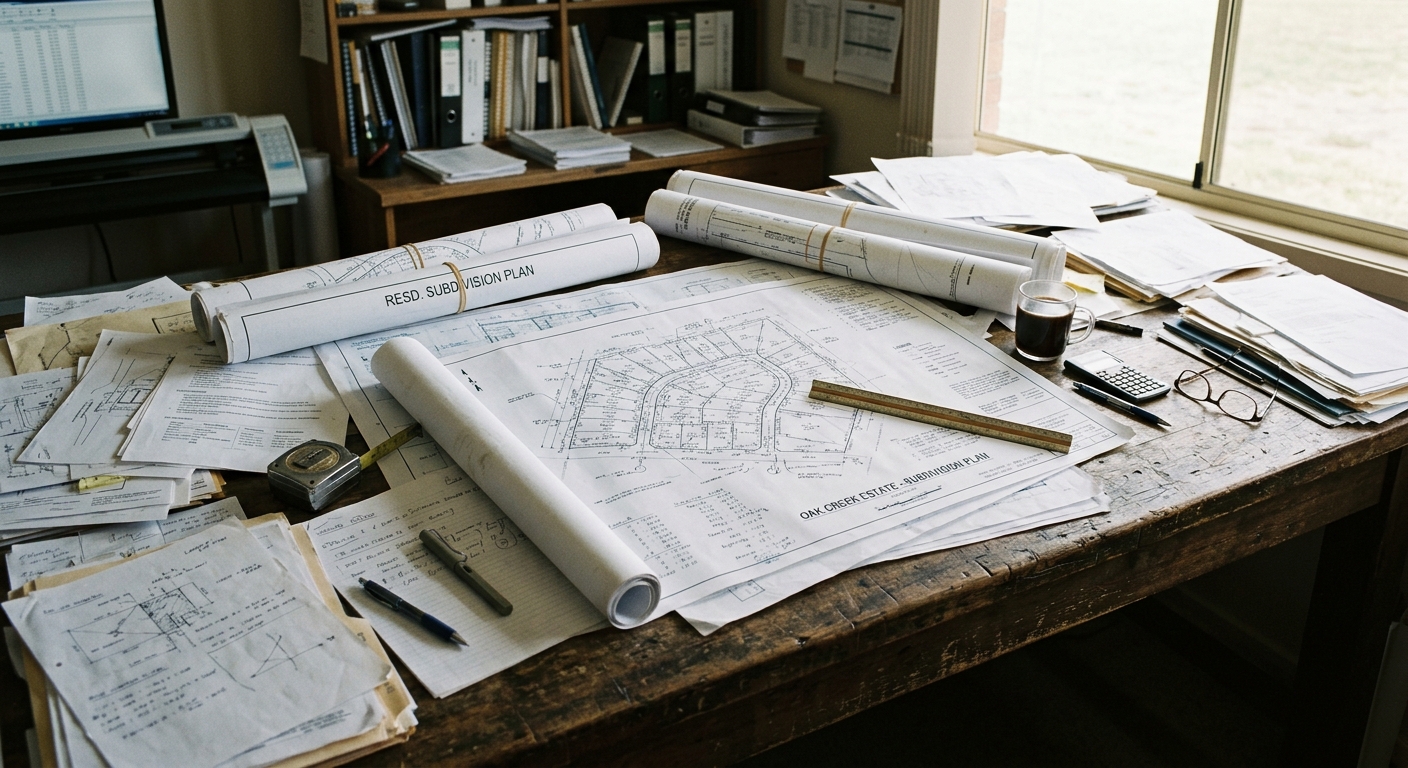
The surveyor starts pulling together the plan sealing application. They email the planner asking which conditions have been addressed. The planner sends a spreadsheet, last updated four months ago. Half the entries say "in progress." There are no documents attached.
The engineer's certificates are somewhere in a shared drive. Three versions of the drainage report exist. It's not clear which one was submitted to council or whether council accepted it. The civil contractor completed the works six weeks ago. Nobody has the as-constructed drawings yet.
The developer received the infrastructure charge notice three months ago. They paid it. The receipt is in someone's email. It hasn't been filed against the relevant DA condition.
Nothing has been lost, exactly. But nothing is in order either. Assembling the application means chasing eight people across four organisations and hoping nothing falls through the gaps.
Why it happens
Each party on a subdivision project works within their own system. The planner has their own folder structure. The engineer uses a different project management tool. The developer uses email. The surveyor uses their own practice software.
There is no shared record. Documents are created in one system and emailed into another. Conditions are tracked independently by whoever is responsible for them. No one has a view across the full condition schedule.
This isn't unusual. It's how most projects run. It works well enough until someone needs to see the complete picture. At that point, the fragmentation becomes the problem.
On longer projects, it gets worse. Consultants change. Personnel move on. The institutional knowledge of what was agreed, what was submitted, and what council accepted exists in the memories of people who may no longer be on the project.
Impact on plan sealing
The direct impact is delay. A plan sealing application submitted with gaps will generate an outstanding matters letter from council. The project team then has to resolve those items under time pressure, with contracts already in place and settlements expected.
Rework is common. Documents that should have been collected progressively have to be chased, verified, and sometimes recreated. Conditions that were addressed but never properly documented need to be evidenced again.
There is also the uncertainty problem. When information is fragmented, the project team doesn't know whether the application is complete until council tells them it isn't. Lodgement happens on the basis of best effort rather than confirmed completeness.
At this stage in the project, developers are at maximum debt exposure. Purchasers are waiting on titles. Any delay has direct financial consequences. The fragmentation that was manageable during construction becomes a serious problem at the worst possible time.
Improving the process
The fix isn't complicated. It requires a shared record of conditions and documents that all relevant parties can access and update throughout the project, not just at lodgement.
Each DA condition should be listed individually. A responsible party should be assigned to each one. When compliance evidence is produced (a certificate, a receipt, a council sign-off) it should be attached directly to the condition it satisfies. Not emailed around. Not stored in a general folder. Linked to the specific condition.
This approach means the plan sealing application is being built progressively over the life of the project. By the time lodgement comes around, most of the work is already done.
Clear responsibility also matters. On multi-consultant projects, it is worth being explicit about who is responsible for each condition, not just at the category level (planner, engineer, developer) but at the individual condition level. When responsibility is ambiguous, conditions get missed.
Using a structured system
PlanEase provides a shared structure for managing plan sealing across the full project team. Conditions from the DA are extracted and organised within the platform. Each condition is assigned to the responsible party. Documents are attached as they are produced.
Rather than each consultant tracking their piece in isolation, the project has a single condition record that reflects the actual state of compliance. When the surveyor needs to prepare the plan sealing application, the information is already there, not scattered across six email threads and three shared drives.
The platform is used by town planners, surveyors and developers on subdivision projects across South East Queensland.
Practical benefits of a structured approach
- All DA conditions visible in one place across the project team
- Responsibility assigned to specific parties, not left ambiguous
- Compliance evidence linked directly to individual conditions
- Outstanding items identified early, not at lodgement
- No reconstruction required: the record builds over time
- Consistent process across multiple projects and consultants
- Reduced risk when personnel change mid-project
Frequently asked questions
Why is plan sealing in Queensland managed across so many parties?
Subdivision development involves specialist consultants across planning, survey, civil engineering, legal, and development management. Each consultant is appointed for their specific scope. There is no single party responsible for the end-to-end plan sealing process, which means coordination has to be actively managed rather than assumed.
What are the most common causes of incomplete plan sealing applications?
Missing documents, incorrect or outdated certificates, unanswered referral conditions, and unpaid contributions are the most frequent issues. Most of these are not complex problems. They are information management problems. Documents exist but haven't been collected. Conditions have been addressed but the evidence hasn't been linked to the application.
How does consultant turnover affect plan sealing?
When a planner or project manager changes during a project, the informal knowledge of what has been done (what was agreed with council, which version of a document was accepted, which conditions are still outstanding) can be lost. If conditions are only tracked in personal notes or email, that knowledge leaves with the person. A shared record that persists independently of individual consultants reduces this risk.
Is fragmentation worse on staged subdivisions?
Yes. Staged subdivisions run over longer periods, involve more lodgements, and often have conditions that carry across multiple stages. The longer the project runs, the more opportunities there are for information to become fragmented, for personnel to change, and for compliance records to fall out of order.
What does an outstanding matters letter mean for a project?
An outstanding matters letter from council identifies conditions that have not been satisfied or documents that are missing or insufficient. It effectively puts the plan sealing application on hold until those items are resolved and resubmitted. On projects with time-sensitive settlements, even a short delay from an outstanding matters letter can have significant financial consequences.
Fragmentation in plan sealing is a process problem that gets worse the longer it goes unaddressed. The parties involved are capable. The conditions are known. The documents exist. Getting them into one structured, shared record, maintained progressively rather than assembled at the end, is the change that makes the difference.
Learn more about PlanEase
Structured condition tracking and document management for plan sealing in Queensland.
See how PlanEase works →