Plan sealing · Guide
Bonding Uncompleted Works in Queensland Subdivisions
Bonding uncompleted works lets a Queensland council seal a survey plan before every last item of subdivision work is finished, by holding financial security over the outstanding works. It can save weeks at the end of a project, but it is discretionary, it does not cover everything, and a called bond is expensive. This guide explains when a subdivision bond is available in Queensland, what councils typically exclude, and how to reduce the risk that a bond is ever drawn on.
What bonding uncompleted works means
Bonding uncompleted works is an arrangement where a Queensland council accepts financial security (usually cash or a bank guarantee) over works that are not yet finished, so that a survey plan can be sealed before those works are complete. Brisbane City Council describes an uncompleted works bond (UCWB) as a payment made by a developer to Council that provides financial security to cover uncompleted works associated with the delivery of Council assets conditioned as part of a development approval, and notes that a UCWB can allow for the early release of a survey plan.
The point of the mechanism is timing. Normally a council will not seal a plan until the conditions and works on the approval are satisfied. Bonding brings the seal forward: the council holds security instead of finished works, the plan is released, titles can issue, and the developer completes the last works afterwards under the bond. In practice this is often called an early plan seal or early release of the plan of subdivision.
The legal footing sits in the plan sealing framework. Under Schedule 18 of the Planning Regulation 2017, a local government must approve a plan of subdivision, or notify the applicant of non-compliance, within 20 business days of a compliant request. Councils treat a bond over remaining works as one way to reach that "compliant" state without every item physically finished, at their discretion.
The problem bonding is trying to solve
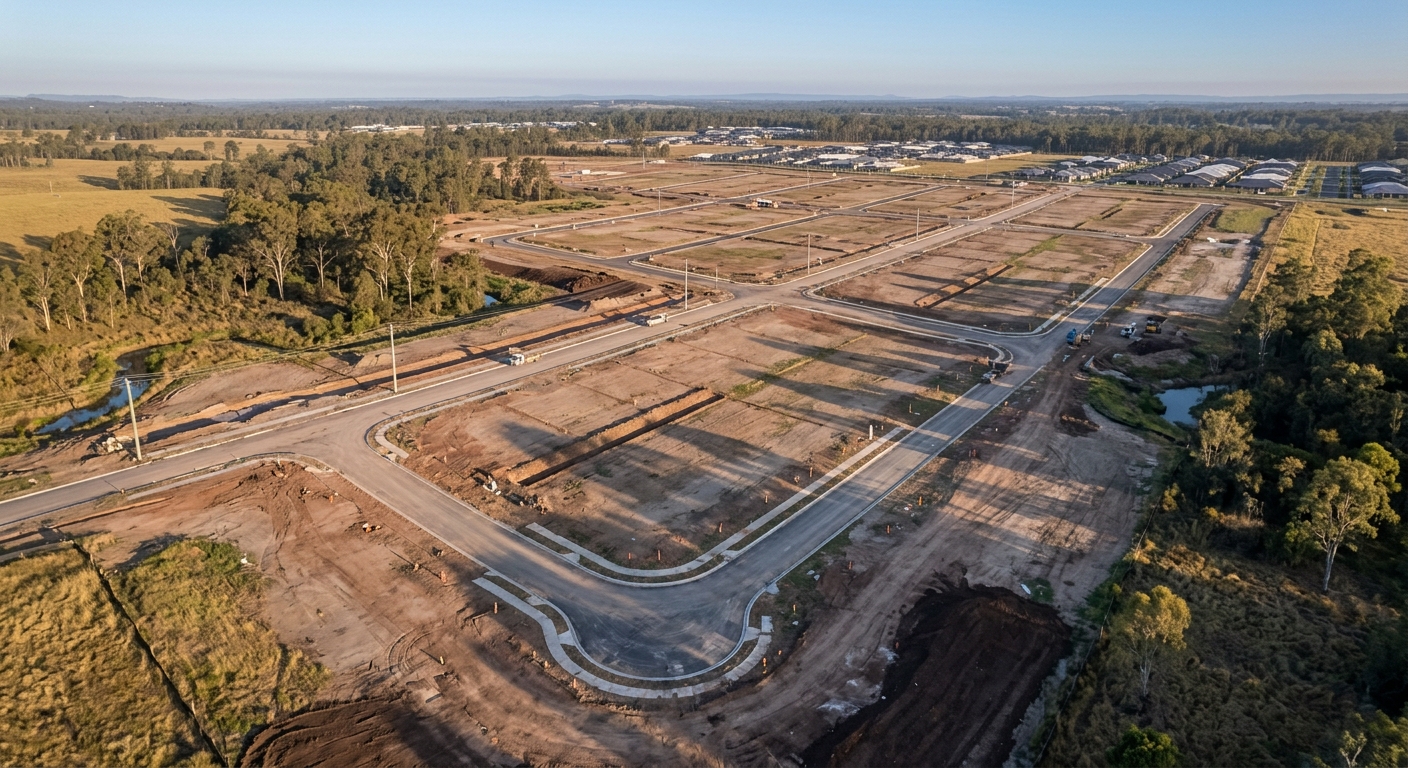
The problem bonding solves is that a subdivision can be commercially ready to settle while a small tail of works remains, and without a bond the whole project waits on that tail. Landscaping, street trees, footpath sections, line marking, and minor verge works are common examples: low value relative to the project, but enough to hold up sealing if they are treated as blocking items.
When settlements are contracted to plan registration, that tail is expensive. Every week the plan is not sealed is a week of holding costs, deferred revenue, and exposure to finance covenants and buyer sunset clauses. Weather, contractor availability, or a single outstanding certificate can push completion of trivial works past the date the lots are otherwise ready. Bonding exists so that a minor, well-understood remainder does not stall a title that is otherwise ready to issue.
When bonding is, and is not, available
Bonding is available at the council's discretion and only for works the council is prepared to secure rather than see finished first. It is not a right, and the categories that can be bonded are narrower than many developers expect. Brisbane City Council states plainly that it reserves the right not to accept a bond for uncompleted works, currently accepts a UCWB only where the value of work outstanding is greater than $25,000, and that a UCWB cannot be used to defer payment of infrastructure charges levied as part of a development approval.
External authority sign-offs are the classic exclusion. Sunshine Coast Council advises that Unitywater certificates and certificates for reticulated electricity and telecommunications cannot be bonded and must be held before release of the plan of subdivision. In other words, water, sewer, power, and telecommunications connection evidence is a hard gate: no bond substitutes for it. Bonding tends to be reserved for physical works that are safe to complete after sealing and easy to value, not for compliance items that depend on a third party.
Councils also set the multiplier and the timeframe. Cairns Regional Council calculates an uncompleted works bond at 1.5 times the value of the works, holds it until all works are complete, and states the bond generally should not exceed 90 days, becoming refundable once the works achieve works acceptance. The multiplier is deliberate: the security must cover the council's cost of finishing the works itself, plus a margin, if the developer does not.
Time saved: bringing the seal forward
The time bonding saves is the gap between "lots ready to sell" and "last minor works finished and certified." On a staged residential subdivision that gap can be several weeks, and it usually falls at the worst possible moment, right before settlement, when finance and buyer deadlines are least forgiving.
Bonding only delivers that saving cleanly when the outstanding works are already identified, valued, and agreed with the council in advance. A bond schedule assembled at the last minute, over works no one has priced, tends to trigger the same requests for information that stall an ordinary plan seal. The saving comes from knowing early which items are candidates for bonding and having the valuation and the security ready when the plan is lodged.
Risk reduced, and the risk a bond creates
Bonding reduces the risk that a minor works remainder delays settlement, but it introduces a different, sharper risk: a called bond. If the developer does not complete the bonded works within the council's timeframe, the council can draw on the security and complete the works itself. Because the bond is set above the value of the works (1.5 times, in the Cairns policy), a called bond costs materially more than simply finishing the works would have, and the money is gone until the council reconciles its actual costs.
There is a second, quieter risk: the works do not disappear when the plan is sealed. Titles have issued and lots may have sold, but the obligation to complete and certify the bonded works, and any maintenance period that follows, still sits with the developer. If that obligation is not tracked with the same discipline after sealing as before, it is easy for a bonded item to drift past its deadline, which is exactly the situation that leads to a called bond. Bonding does not remove work; it moves it past the finish line where attention naturally drops off.
How structured tracking keeps a bond from being called
The practical defence is to treat bonded works as live, owned obligations with deadlines, not as items that are "done" because the plan is sealed. That means recording, for each bonded item: the agreed scope and value, the council's completion deadline, who is responsible for finishing it, the certificate required to release the bond, and any maintenance obligation that follows works acceptance.
This is the same discipline that prevents plan sealing from breaking down in the first place. Operational works are the largest single category of activity in PlanEase's own data, which is one reason bonded and uncertified works are such a common source of late problems.
PlanEase analysis of public Queensland council and Economic Development Queensland development application registers, 25 May 2026 to 22 August 2026. Operational Works was the largest single application type in the period.
Approximate figures from PlanEase's analysis of public registers, data updated 16 August 2026, subject to revision. Not official statistics.
PlanEase keeps every condition, works item, and piece of evidence in one structured record with clear ownership, so a bonded item stays visible with its deadline attached instead of disappearing into a project folder after the plan is sealed. For the wider picture of how works are approved, certified, and secured, see our guides to operational works approvals in Queensland, operational works and plan sealing, and the plan sealing checklist for Queensland subdivisions.
Frequently asked questions
What is an uncompleted works bond in Queensland?
An uncompleted works bond is financial security (usually cash or a bank guarantee) that a Queensland council holds over subdivision works that are not yet finished, so that the survey plan can be sealed early. Brisbane City Council describes it as a payment that provides financial security to cover uncompleted works associated with delivering Council assets conditioned on the approval, and notes it can allow early release of a survey plan.
Can any outstanding item be bonded?
No. Bonding is at the council's discretion and is generally limited to physical works that are safe to complete after sealing and easy to value. External sign-offs are commonly excluded: Sunshine Coast Council advises that Unitywater certificates and certificates for reticulated electricity and telecommunications cannot be bonded and must be held before the plan is released. Brisbane City Council also states a bond cannot be used to defer payment of infrastructure charges.
How much does a subdivision bond cost?
Councils set the multiplier over the value of the outstanding works, and it is set above 100% so the security covers the council's cost of finishing the works plus a margin. Cairns Regional Council, for example, calculates its uncompleted works bond at 1.5 times the value of the works. Check the specific council's current policy, as thresholds and multipliers differ between councils.
How long do you have to complete bonded works?
Councils attach a completion timeframe to the bond, after which they can call on the security. Cairns Regional Council states its uncompleted works bond generally should not exceed 90 days and becomes refundable once the works achieve works acceptance. Missing that deadline is what leads to a bond being called, so the completion date should be tracked as a hard obligation.
What happens if a bond is called?
If the bonded works are not completed and certified in time, the council can draw on the security and arrange completion itself. Because the bond is set above the value of the works, a called bond costs more than finishing the works would have, and the funds are unavailable until the council reconciles its actual costs. Tracking each bonded item to its deadline is the most reliable way to avoid this.
Bonding uncompleted works is a genuinely useful lever in Queensland subdivisions: used well, it converts a minor works tail into a settlement that proceeds on time. Used carelessly, it swaps a scheduling delay for a called bond and a compliance obligation that outlives everyone's attention. The difference is whether the outstanding works are identified early, valued, agreed with the council, and tracked to completion after the plan is sealed, not just before it.
Learn more about PlanEase
Keep bonded works, conditions, and evidence in one structured record with clear ownership and deadlines, so nothing drifts after the plan is sealed.
See how PlanEase works →