DA conditions · Townsville
Townsville City Council DA Conditions: Plan Sealing and Approval Management
Townsville is North Queensland's largest city, and its subdivision projects carry a distinctly regional set of DA conditions.
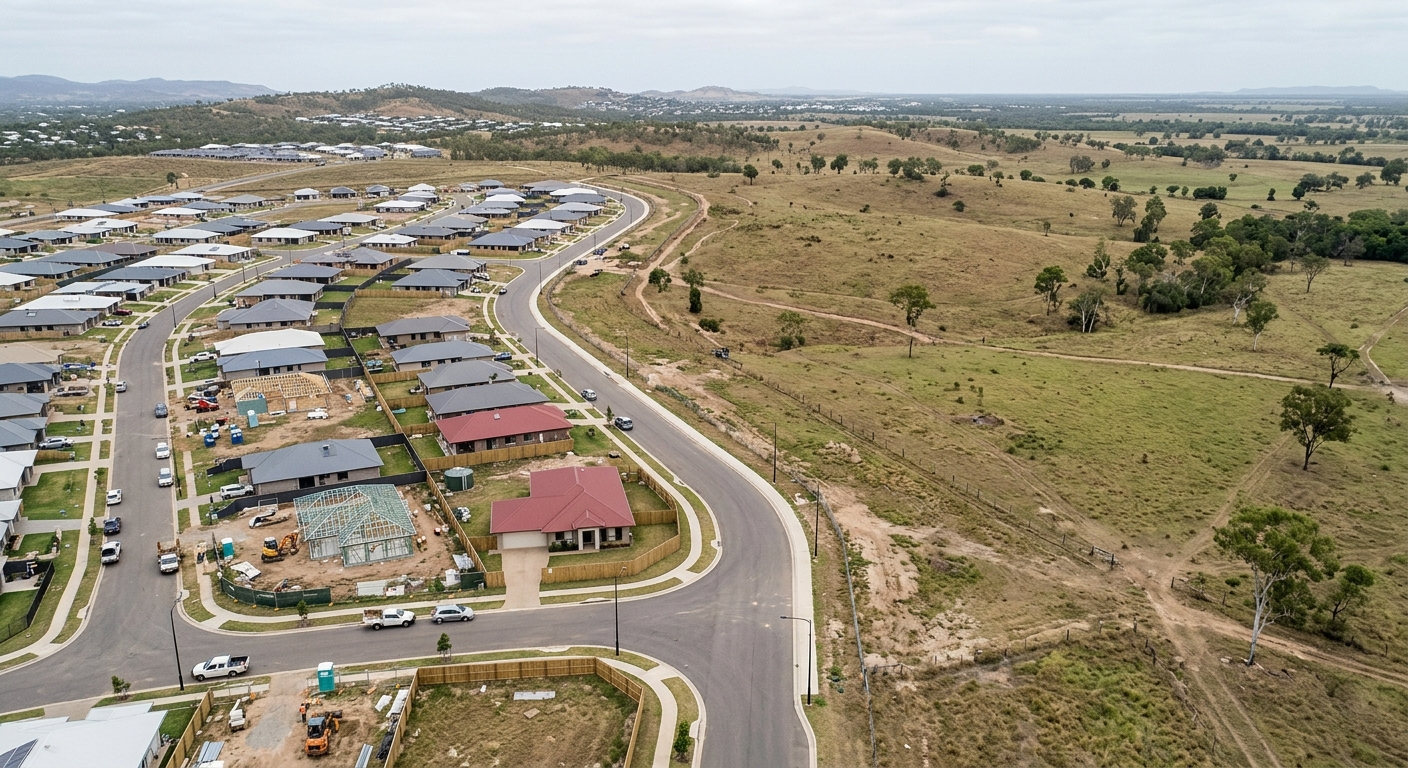
Townsville City Council manages development across North Queensland's largest urban centre, from established suburbs to major growth fronts such as Elliot Springs in the south and the northern beaches corridor. Subdivision approvals in these areas are assessed under the Townsville City Plan, and the DA conditions attached to them reflect the city's particular mix of flooding, coastal and infrastructure constraints.
Managing those conditions from the day the decision notice is issued through to plan sealing is what separates projects that register and settle on time from those that stall. In Townsville the specific pressure points are flood resilience, servicing, and state road referrals, each of which needs to be actioned early rather than left to the plan sealing preparation phase.
Under the Planning Act 2016, a development approval takes effect subject to its conditions, and those conditions must be satisfied before a survey plan can be sealed. In Townsville, the volume of active reconfiguration work makes structured tracking of that condition schedule the difference between a clean lodgement and a drawn out one.
PlanEase analysis of public Queensland council and EDQ development application registers, 16 June 2026 to 12 September 2026.
Approximate figures from PlanEase's analysis of public registers, data updated 16 August 2026, subject to revision. Not official statistics.
According to PlanEase's analysis of public Queensland council and Economic Development Queensland registers for 16 June 2026 to 12 September 2026, Townsville recorded roughly 350 development applications, with a median time to decision of about 14 days and an average (mean, dragged up by the slow tail) of about 19 days. That sits well below the roughly 27 day median across all Queensland councils plus EDQ in the same PlanEase dataset, so the deciding of the application is rarely the bottleneck. The months that follow, satisfying conditions and reaching plan sealing, are where Townsville projects tend to lose time.
How Townsville DA conditions are structured
A Townsville City Council development approval for a subdivision carries conditions from the assessment manager (the council) and, where triggered, conditions from referral agencies. The Townsville City Plan applies overlay codes on top of the standard zone and use codes, and those overlays drive many of the conditions a developer will need to satisfy.
Flood is the defining overlay in Townsville. The city is built on the natural floodplains of the Ross and Bohle Rivers, and the council's own guidance states that the Flood hazard overlay code in the Townsville City Plan is intended to ensure that future development contributes to creating a safe and flood-resilient city in the future
(Townsville City Council, Flood Hazard overlay guidance). For subdivision projects this can mean conditions on minimum fill and habitable floor levels, overland flow paths, and stormwater management, all of which need engineering design and certification before plan sealing.
Servicing conditions in Townsville run through the council itself. Unlike the South East Queensland councils that refer to Unitywater, Townsville City Council operates its own water and sewerage utility (Townsville Water and Waste), so water supply, sewerage and connection conditions are administered in house. That keeps the servicing relationship with a single authority, but the evidence obligations, such as as-constructed records and connection approvals, still need to be satisfied and documented.
Where a subdivision affects a state-controlled road such as the Bruce Highway corridor, the Department of Transport and Main Roads (TMR) is a referral agency. TMR conditions on access, intersection works, sightlines and road dedications carry their own sign-off process and lead times, and confirming compliance with them can involve several rounds of correspondence.
Where Townsville projects run into problems
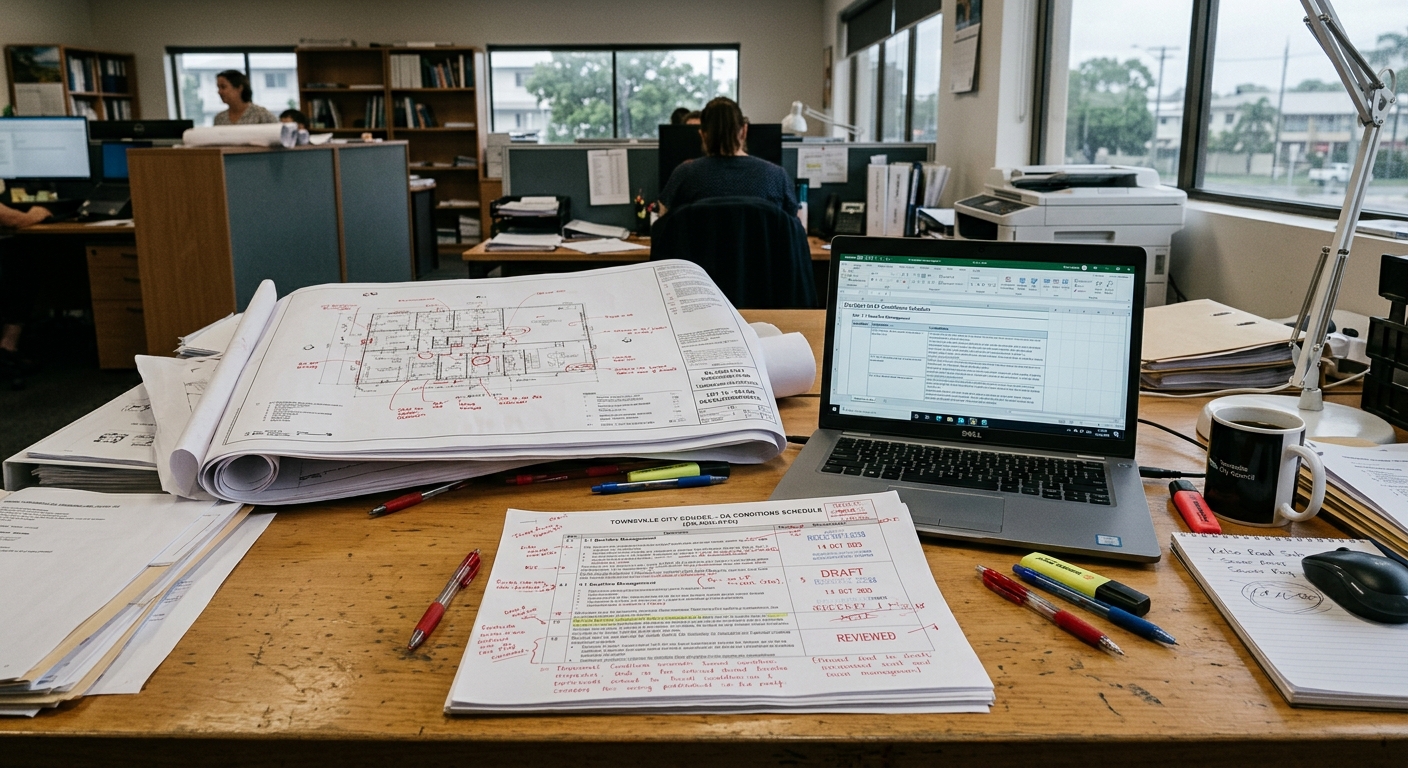
Flood related conditions are the most common source of late surprises on Townsville subdivisions. Conditions tied to the Flood hazard overlay often require engineering models, fill and level certification, and stormwater as-constructed evidence. If that certification is not obtained progressively as works are completed, it becomes an outstanding item at plan sealing, exactly when there is least time to resolve it.
TMR conditions on projects near the Bruce Highway or other state-controlled roads are a second pressure point. The department assesses on its own timeline, and written confirmation that road and access conditions have been met is frequently the last piece to arrive. Starting that engagement late in the project reliably pushes out the sealing date.
On staged growth-front projects such as Elliot Springs, conditions that apply across multiple stages can create confusion about what is required at each individual lodgement. Without a clear record of which conditions attach to which stage, the plan sealing application for a given stage can go in incomplete, generating council requests that add weeks.
Operational works conditions covering roads, drainage and earthworks require formal certification that the works were built to the approved design. When that certification is left until plan sealing preparation rather than captured at practical completion, it becomes a bottleneck.
Time savings from structured condition management
The reliable time saving on a Townsville project comes from starting the slow conditions early. Flood, servicing and TMR conditions all have known processes; the delay comes from beginning them too late to finish without urgency. Identifying them at approval and running them as active workstreams removes that friction.
Building certification milestones into the construction programme, so that flood level, stormwater and operational works certification is obtained at practical completion rather than at plan sealing, keeps the evidence pack current instead of scrambling to assemble it at the end.
A Townsville City Council plan sealing application that is complete on lodgement proceeds without avoidable back and forth. Applications with outstanding matters generate requests that add weeks. With Townsville's fast median decision time on the front of the process, the post-approval condition stage is where a structured approach saves the most calendar time. See managing DA conditions across a project for the practical mechanics.
Risk reduction for Townsville development projects
Townsville subdivision projects carry the same settlement risk as any major Queensland development: unconditional contracts, finance facilities drawn, and purchasers with fixed timelines. A delay to plan sealing is a delay to titles, and a delay to titles is a delay to settlement and revenue.
The specific risk in Townsville comes from the combination of flood-driven engineering conditions, in-house servicing evidence, and state road referrals. Any one of these left unmanaged can hold up an otherwise complete application. Tracking the full condition schedule in one shared register, and keeping it current as the project progresses, is the most dependable way to control that exposure.
On multi-year growth-front projects, the record of what each condition requires and what has been done to satisfy it must outlive staff and consultant turnover. A durable, project-owned condition register protects against the knowledge loss that quietly accumulates over a long build.
Practical approach to Townsville condition management
Review the full Townsville DA condition schedule at approval, with particular attention to Flood hazard overlay conditions, Townsville Water and Waste servicing requirements, and any TMR conditions. These carry the longest lead times and should be actioned first.
On staged projects in Elliot Springs, the northern beaches or other growth fronts, confirm which conditions apply to the current stage and which are project-wide, so each plan sealing application is scoped correctly. For subdivisions moving through operational works, capture certification as works reach practical completion rather than waiting for the sealing phase.
PlanEase supports structured condition management for Townsville City Council projects: tracking conditions from approval, assigning responsibility, attaching evidence, and building the compliance record progressively. See also the subdivision plan sealing process across Queensland and managing DA conditions across a project.
Frequently asked questions
What are the major growth areas for subdivision in Townsville?
Townsville's major residential growth fronts include Elliot Springs in the city's south, a large master planned community, and the northern beaches corridor. Established suburbs also see infill reconfiguration. Each is assessed under the Townsville City Plan, and projects in flood-affected or coastal areas pick up additional overlay-driven conditions.
Why do flood conditions matter so much in Townsville?
Townsville is built on the natural floodplains of the Ross and Bohle Rivers, so the Townsville City Plan applies a Flood hazard overlay across large parts of the city. The council states this overlay is intended to ensure future development contributes to creating a safe and flood-resilient city. For subdivisions this commonly translates into conditions on fill, habitable floor levels, overland flow and stormwater management, all of which need engineering design and certification before a plan can be sealed.
Who provides water and sewerage servicing for Townsville subdivisions?
Townsville City Council operates its own water and sewerage utility, Townsville Water and Waste. Unlike South East Queensland, where councils refer to Unitywater, servicing conditions in Townsville are administered by the council itself. Water supply, sewerage and connection conditions still need to be satisfied and evidenced, but the developer deals with a single authority for them.
When does the Department of Transport and Main Roads get involved in Townsville DAs?
TMR is a referral agency where a development affects a state-controlled road, such as the Bruce Highway corridor through Townsville. TMR conditions can cover access, intersection works, sightlines, road dedications and noise. Obtaining TMR's written confirmation that these conditions are met runs on the department's own process and timeline, so it should be started early rather than left to plan sealing.
How long does a development application take to decide in Townsville?
PlanEase's analysis of public Queensland registers for 16 June 2026 to 12 September 2026 recorded a median time to decision in Townsville of about 14 days, faster than the roughly 27 day median across all Queensland councils plus EDQ. The decision itself is rarely the delay. The time that matters for developers is the post-approval stage of satisfying conditions and reaching plan sealing, which is where structured tracking pays off.
Townsville City Council DA conditions reflect the city's floodplain setting, its in-house servicing model, and its state road referrals. The projects that reach plan sealing without avoidable delay are the ones that identify the slow conditions at approval, run them as active workstreams, and keep a complete, self-evidenced compliance record from day one.
Learn more about PlanEase
DA condition management for Townsville City Council subdivision projects, from approval to plan sealing.
See how PlanEase works →