DA conditions · Northshore Hamilton PDA
Northshore Hamilton PDA: Development Conditions and Plan Sealing
Northshore Hamilton is a Priority Development Area assessed by Economic Development Queensland, not by Brisbane City Council.
In the Northshore Hamilton Priority Development Area (PDA), development approvals are issued by Economic Development Queensland (EDQ) under the Economic Development Act 2012, not by Brisbane City Council under the Planning Act 2016. This is the single most important thing for developers and surveyors to understand: the assessing authority, the statutory process, and the plan sealing pathway all differ from a standard Brisbane subdivision.
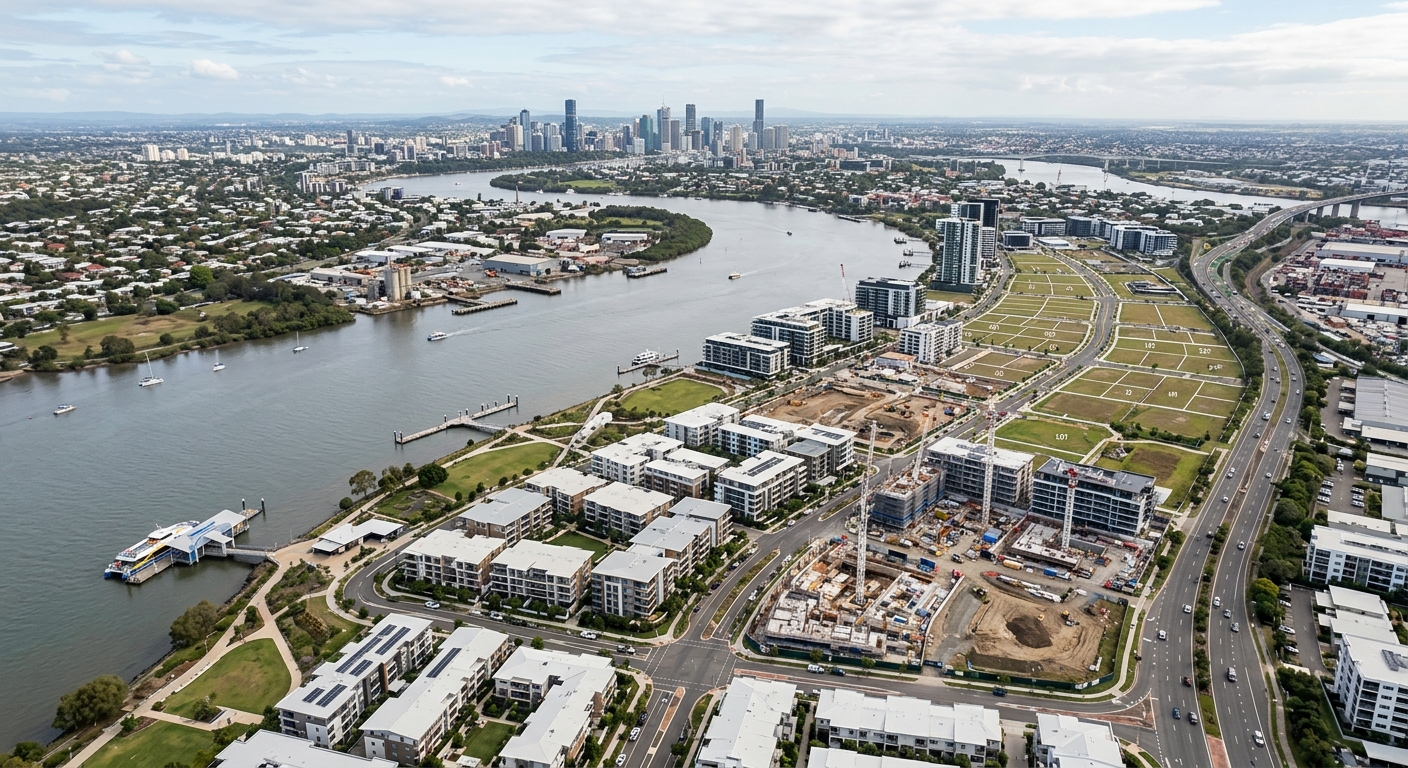
Northshore Hamilton is a large urban-renewal precinct on the Brisbane River. According to Economic Development Queensland, the PDA covers 304 hectares, has over three kilometres of river frontage and is close to Brisbane Airport and the Australian Trade Coast precinct, and it was declared on 27 March 2008. It is one of the largest waterfront urban-renewal projects in Queensland, taking in the Hamilton Reach riverfront and the surrounding mixed-use precincts.
Managing conditions from PDA development approval through to plan sealing is what separates projects that register and settle on time from those that stall. Because the framework is EDQ's rather than council's, the condition schedule and the sign-off pathway need to be tracked against the right process from day one.
How Northshore Hamilton PDA conditions are structured
Development in the Northshore Hamilton PDA is assessed against the Northshore Hamilton PDA Development Scheme, EDQ's regulatory framework for the area, not the Brisbane City Plan. Under section 69 of the Economic Development Act 2012, the Minister for Economic Development Queensland gave notice that the Northshore Hamilton PDA Development Scheme was amended on 21 November 2025, and the amended scheme is now in effect. Conditions on a Hamilton Reach subdivision reference the current development scheme provisions rather than council codes, so checking the version in force at the time of approval matters.
A PDA development approval carries conditions covering matters such as infrastructure, engineering works, landscaping, riverfront and public realm outcomes, and staging. Reconfiguring a lot in the PDA leads to a plan of subdivision that EDQ must approve before it can be registered with the Titles Registry. EDQ has forms for a range of processes under the Economic Development Act 2012, including approval of a plan of subdivision, and applications can be lodged and tracked through EDQ's online customer portal.
Many conditions require compliance assessment before they are treated as satisfied. Within 20 business days of lodgement, EDQ assesses the information submitted against a condition of approval and either endorses it as satisfying the condition or notifies the applicant that it does not. Each of those sign-offs is a discrete item that has to be evidenced and closed out before the plan of subdivision can proceed.
Where Northshore Hamilton projects run into problems
The most common problem is treating a PDA project like a standard council subdivision. The assessing body, the scheme, and the plan-of-subdivision approval all sit with EDQ, so applying Brisbane City Council process assumptions to a Northshore Hamilton project leads to the wrong forms, the wrong evidence, and avoidable back-and-forth.
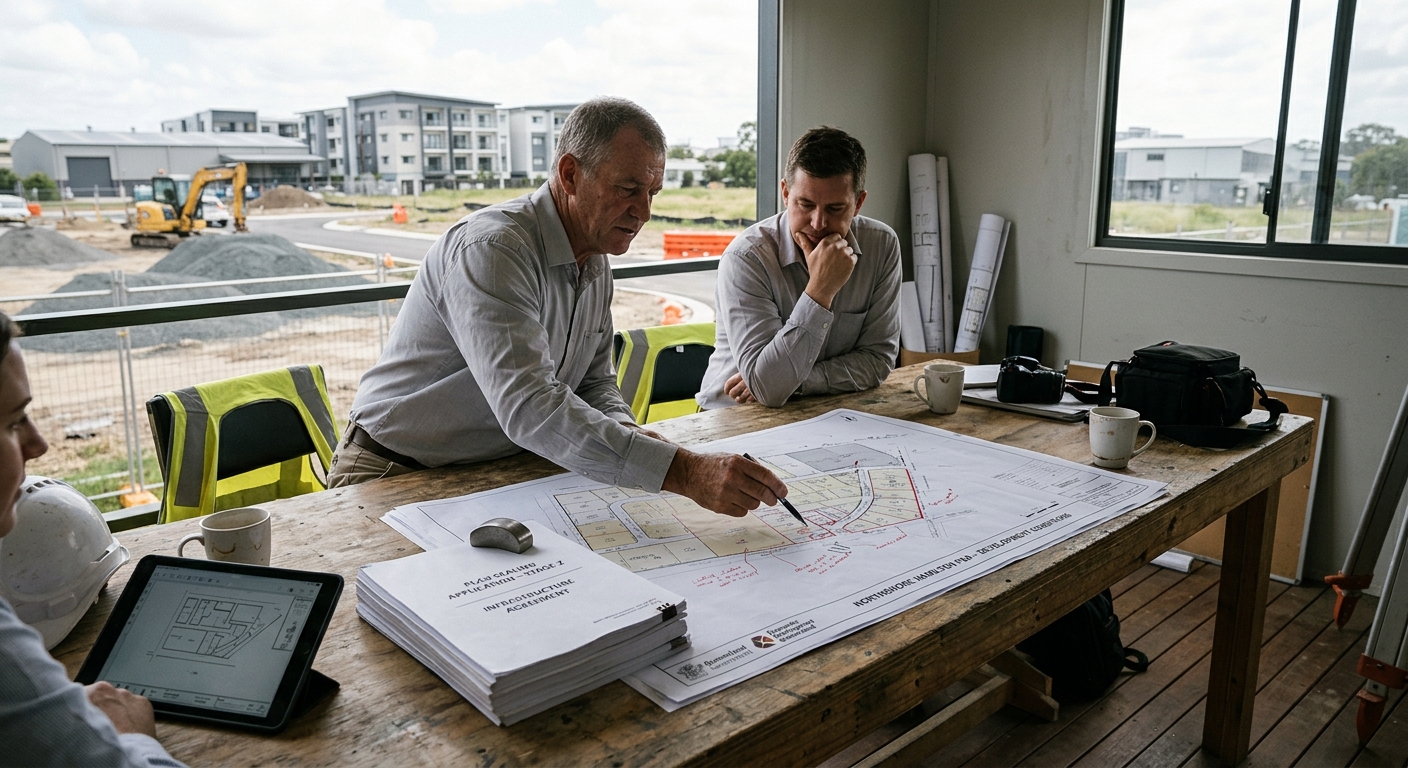
Compliance assessment items are a specific pressure point. Each condition that requires EDQ endorsement is a separate submission with its own turnaround, and if those items are left to the end of the project they queue up at exactly the moment the developer is trying to register and settle. On a staged riverfront development, conditions that apply across stages can also create confusion about what must be satisfied at each individual plan-of-subdivision lodgement.
Long-duration urban-renewal projects lose compliance knowledge as consultants and staff turn over. Without a shared, current record of which conditions are satisfied, which are outstanding, and who is responsible, the compliance position has to be reconstructed under time pressure at the end. See loss of compliance knowledge over long projects for how this risk accumulates.
Time savings from structured condition management
The time saving on a Northshore Hamilton PDA project comes from starting the slow items early and closing them out progressively rather than in a rush before registration. Under the Economic Development Act, there is a 40-business day statutory timeframe to decide a PDA development application, and each compliance-assessment sign-off adds its own turnaround on top. Sequencing those submissions early, rather than batching them at the end, keeps the plan-of-subdivision approval on track.
A plan of subdivision that is lodged with every condition already evidenced and endorsed proceeds without a request for further information. Applications with outstanding matters generate correspondence that adds weeks. The saving from a complete first submission is direct and repeatable across every stage of a staged PDA project.
Risk reduction for Northshore Hamilton developments
The financial exposure on a PDA project is the same as any major subdivision: unconditional contracts, drawn finance facilities, purchasers with fixed plans, and holding costs that accrue while a plan waits to register. The specific risk at Northshore Hamilton is that the EDQ pathway is unfamiliar to teams used to council processes, which makes informal, memory-based condition tracking especially fragile.
PlanEase tracks development-application registers for Queensland councils plus EDQ. PlanEase's own analysis of public Queensland council and Economic Development Queensland development-application registers (for the period 18 May 2026 to 14 August 2026) shows a typical council decision taking about 24 days, with Brisbane running longer at about 34 days as the typical time to decide. EDQ, as the state PDA authority, is tracked by volume and application-type mix rather than a single decision-time figure, so a Northshore Hamilton timeline should be planned against the ED Act process, not a council benchmark.
Approximate figures from PlanEase's analysis of public registers, data updated 16 August 2026, subject to revision. Not official statistics.
A structured condition register that keeps the full compliance position visible, and current, is the most reliable way to manage this risk across a multi-year riverfront development. See managing DA conditions across a project for the general approach.
Practical approach to Northshore Hamilton condition management
Confirm at approval that the project is being managed against the correct EDQ framework: the Northshore Hamilton PDA Development Scheme in force, the PDA development approval conditions, and the EDQ plan-of-subdivision approval pathway rather than a council plan sealing process. For the difference between the two, see plan sealing in Priority Development Areas and EDQ development approvals and conditions compliance.
Identify every condition that requires compliance assessment and start those submissions early, tracking each endorsement as a separate closed-out item. For a contrast with the standard council process next door, see Brisbane City Council DA conditions. For the strategic picture of PDA delivery and the post-approval gate, see where PDA delivery is won or lost after approval.
Frequently asked questions
Who approves development in the Northshore Hamilton PDA?
Economic Development Queensland (EDQ) assesses and approves development in the Northshore Hamilton Priority Development Area under the Economic Development Act 2012. Brisbane City Council is not the assessment manager inside the PDA. The PDA was declared on 27 March 2008 and covers 304 hectares of riverfront urban-renewal land, with EDQ acting as both the planning authority and a significant landowner.
How long does EDQ take to decide a PDA development application?
Under the Economic Development Act, there is a 40-business day statutory timeframe to decide a PDA development application, and an application cannot be decided until any required public notification is complete. Separately, where a condition of approval requires compliance assessment, EDQ assesses the submitted information within 20 business days of lodgement and either endorses it or notifies the applicant that it does not satisfy the condition. These are indicative process steps, not a guaranteed total project timeline.
How is plan sealing different in the Northshore Hamilton PDA?
In the PDA, a reconfiguration of a lot leads to a plan of subdivision that EDQ, not council, must approve before it can be registered with the Titles Registry. EDQ provides specific forms for approval of a plan of subdivision under the Economic Development Act 2012, lodged through its online customer portal. The evidence and sign-offs required flow from the PDA development approval conditions and the Northshore Hamilton PDA Development Scheme rather than a council plan sealing process.
Which development scheme applies at Northshore Hamilton?
Development is assessed against the Northshore Hamilton PDA Development Scheme, EDQ's regulatory framework for the area. The scheme was amended on 21 November 2025, and the amended scheme is now in effect, so it is worth confirming the version in force when conditions were imposed. This scheme replaces the Brisbane City Plan as the assessment framework inside the PDA boundary.
Does PlanEase support Northshore Hamilton PDA projects?
Yes. PlanEase provides structured condition management for Queensland subdivision projects, including EDQ-assessed PDA projects such as Northshore Hamilton. It tracks conditions from approval, assigns responsibility, records each compliance-assessment endorsement, and builds the plan-of-subdivision evidence progressively so the application is complete at lodgement.
Northshore Hamilton PDA conditions sit under EDQ's Economic Development Act framework rather than Brisbane City Council's, which changes the assessing authority, the scheme, and the plan-of-subdivision pathway. Projects that track conditions and compliance-assessment sign-offs from approval, against the correct EDQ process, arrive at plan of subdivision in a position to lodge a complete application and register without avoidable delays.
Learn more about PlanEase
DA and PDA condition management for Northshore Hamilton and Hamilton Reach subdivision projects.
See how PlanEase works →