EDQ and PDAs · Part 1 of 2
Priority Development Areas: Where Delivery Is Won or Lost After Approval
Queensland has committed to a million new homes, and Economic Development Queensland is releasing the land to build them on a scale that amounts to new cities. Yet the targets keep slipping, and the reason is not slow approvals. It lies in the last mile after approval, in the work that turns an approved lot into a titled, settleable home.
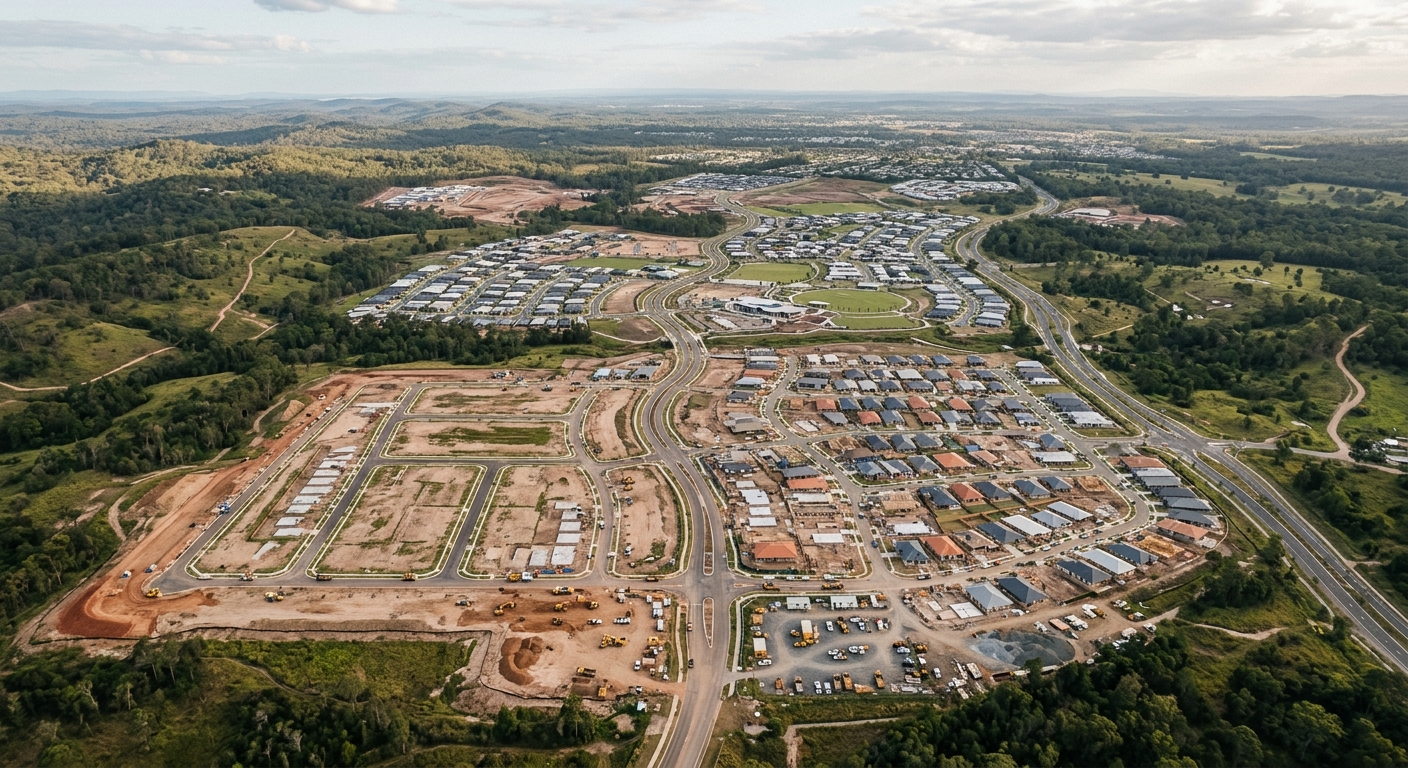
The scale of the task is the right place to begin. Under the Economic Development Act 2012, EDQ declares Priority Development Areas and writes the development schemes that govern them, and its portfolio has grown to 38. The largest are less like estates than like cities in their own right. Greater Flagstone covers 7,188 hectares and is planned for around 51,500 dwellings and up to 138,000 people over a build-out of 30 to 40 years, while Ripley Valley covers 4,680 hectares and around 48,750 dwellings for a population near 131,000 (Economic Development Queensland project pages, 2026).
Where the targets stand
That land is the engine room for the state's housing commitments, and those commitments are substantial. Homes for Queenslanders sets a target of one million new homes by 2046, including 53,500 social homes, while the National Housing Accord seeks 1.2 million homes nationally by mid-2029, of which Queensland's share is 246,000. In South East Queensland alone, where more than 80 percent of the state's growth is expected to land, ShapingSEQ 2023 calls for almost 900,000 new homes by 2046, an average of roughly 34,500 a year.
National Housing Supply and Affordability Council, State of the Housing System 2026.
The shortfall is now a matter of official record. The National Housing Supply and Affordability Council's 2026 report estimates that Queensland will deliver about 204,000 homes over the Accord period, roughly 83 percent of its share, and will not reach that share until around September 2030, more than a year after the window has closed. In the same report, the Council identifies complex land-use and planning-approval systems as a principal structural barrier to supply.
The bottleneck is not approval speed
It is worth being precise about where the delay actually sits, because the front of the pipeline is already fast. Under the Economic Development Act, the MEDQ delegate must decide a PDA application within 40 business days, and PlanEase's analysis of the public Queensland council registers tells much the same story in the areas that host the major PDAs. Over the three months to 14 August 2026, the median time to a decision was about 24 days in Ipswich, about 21 on the Gold Coast, about 21 on the Sunshine Coast and about 30 in Logan.
Approximate figures from PlanEase's analysis of public registers, data updated 16 August 2026, subject to revision. Not official statistics.
Decisions, in other words, are not where the calendar disappears. The time is lost after the approval has issued, during the period in which its conditions are satisfied: operational works are designed, built and certified, infrastructure obligations are met, and the survey plan is prepared for sealing. EDQ defines plan sealing as the point at which it approves the survey plan, once every condition of the development approval and every infrastructure requirement has been met, and a lot title cannot be registered with Titles Queensland until that step is complete.
If anything, the pressure on that later stage is rising, because approvals are accelerating rather than slowing. EDQ reports a record 8,003 new homes and lots approved across its Priority Development Areas in 2025, an increase of 15 percent in a single year, and government is reinforcing the trend with a $2 billion Residential Activation Fund for enabling infrastructure and a new EDQ-led Land Activation Program to bring surplus land to market more quickly. PlanEase's own analysis points the same way: PDA decisions have risen from about 75 in FY24 to about 115 in FY25 and about 160 in FY26, the FY26 approvals including subdivision approvals that create 3,300+ new lots. The faster approvals flow, the more the outcome turns on a single question: how quickly does an approved lot become a titled one?
An approved lot is not a home. It becomes one at plan sealing, the one stage no approval statistic measures.
Why this is a strategic question
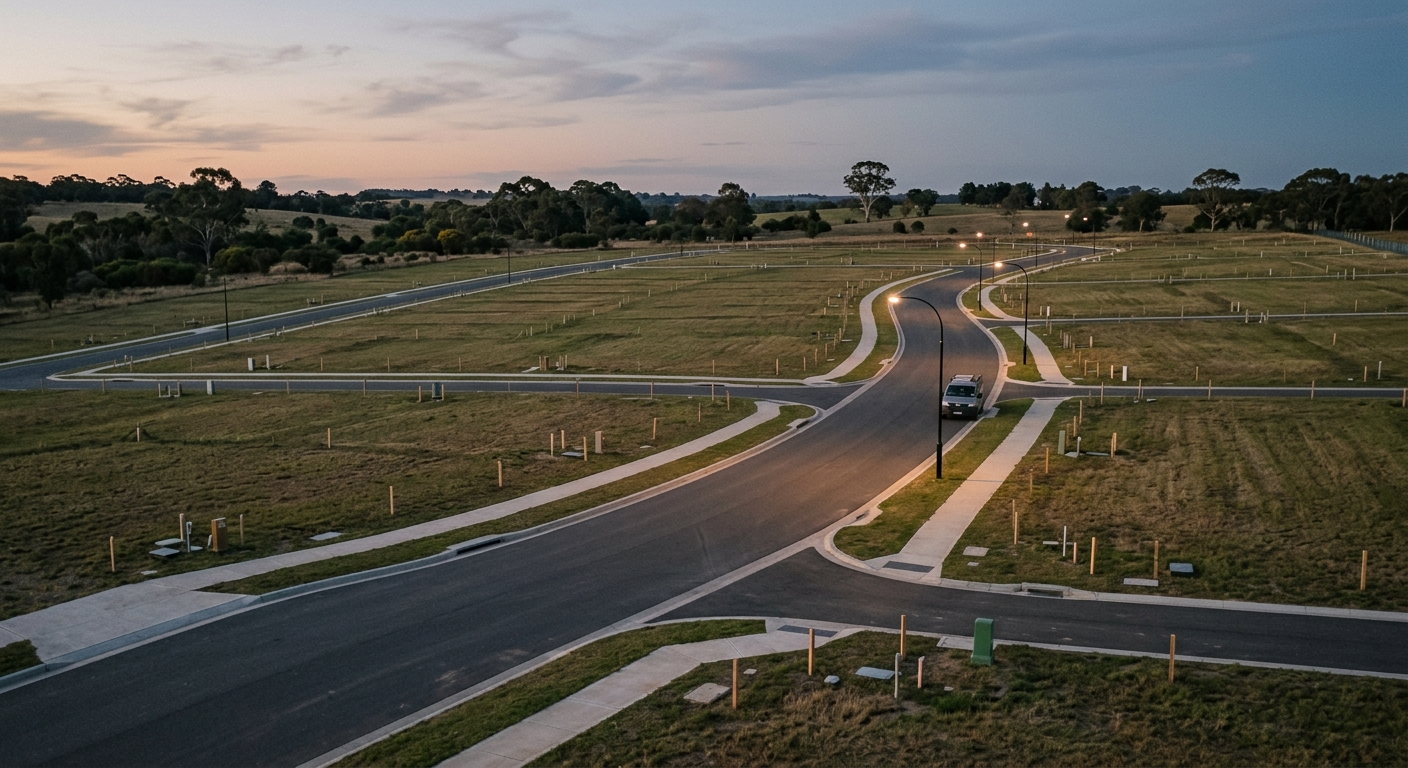
Seen across 38 PDAs and communities that run for decades, the post-approval stage is not a formality but a vast body of work: thousands of conditions moving through hundreds of stages at any one time. Where that work is tracked loosely, the problems tend to surface at the finish line, at the moment a plan is ready to seal and there is little time left to resolve them without cost. Repeated across a portfolio of this size, small delays at plan sealing compound into a material drag on how quickly land becomes housing, and on how quickly the state closes the gap to its targets.
The implication is that the post-approval stage deserves to be measured and managed rather than assumed. That is the whole purpose of PlanEase, a plan-sealing and DA condition-management platform built for exactly this stage. Because plan sealing is EDQ's own step, that stage is also EDQ's to run. Part 2 turns to how EDQ and the teams delivering its PDAs can run it on one platform, conditions through to plan sealing. For the underlying mechanics, our guides to plan sealing in Priority Development Areas and managing DA conditions across a project set out the detail.
Continue to Part 2
How EDQ and the teams delivering its PDAs can run the post-approval stage on one platform, conditions through to plan sealing.
Read Part 2 →Frequently asked questions
Who assesses development applications in a Priority Development Area?
Economic Development Queensland assesses PDA applications for the Minister for Economic Development Queensland under the Economic Development Act 2012, against the PDA's development scheme. For some PDAs the assessment is delegated back to the local council: in Ripley Valley, for example, it was delegated to Ipswich City Council in 2013.
How fast are PDA development decisions?
The Economic Development Act sets a 40 business day statutory timeframe for the delegate to decide a PDA development application once it is properly made and any public notification is complete. Decision speed is generally not the bottleneck. The longer stretch sits after approval.
Why does delivery slow down after approval?
After a development approval is issued, its conditions must be satisfied before the survey plan can be sealed and lot titles registered with Titles Queensland. Operational works, infrastructure sign-offs and condition compliance all sit in this stage. It is the least measured and often the longest part of the timeline.
Is Queensland on track for its housing targets?
Not currently. The National Housing Supply and Affordability Council's 2026 report estimates Queensland will deliver about 83 percent of its 246,000-home Accord share and will not reach it until around September 2030, over a year after the Accord ends. Homes for Queenslanders targets one million new homes by 2046.
A conversation about PDA delivery
PlanEase works at the plan-sealing gate where PDA delivery timing is decided. We would welcome a conversation with EDQ, and with the teams delivering its Priority Development Areas, about keeping that stage on track.
Start the conversation →