1.0 At a glance
The problem the platform exists to solve, and how it solves it.
The problem
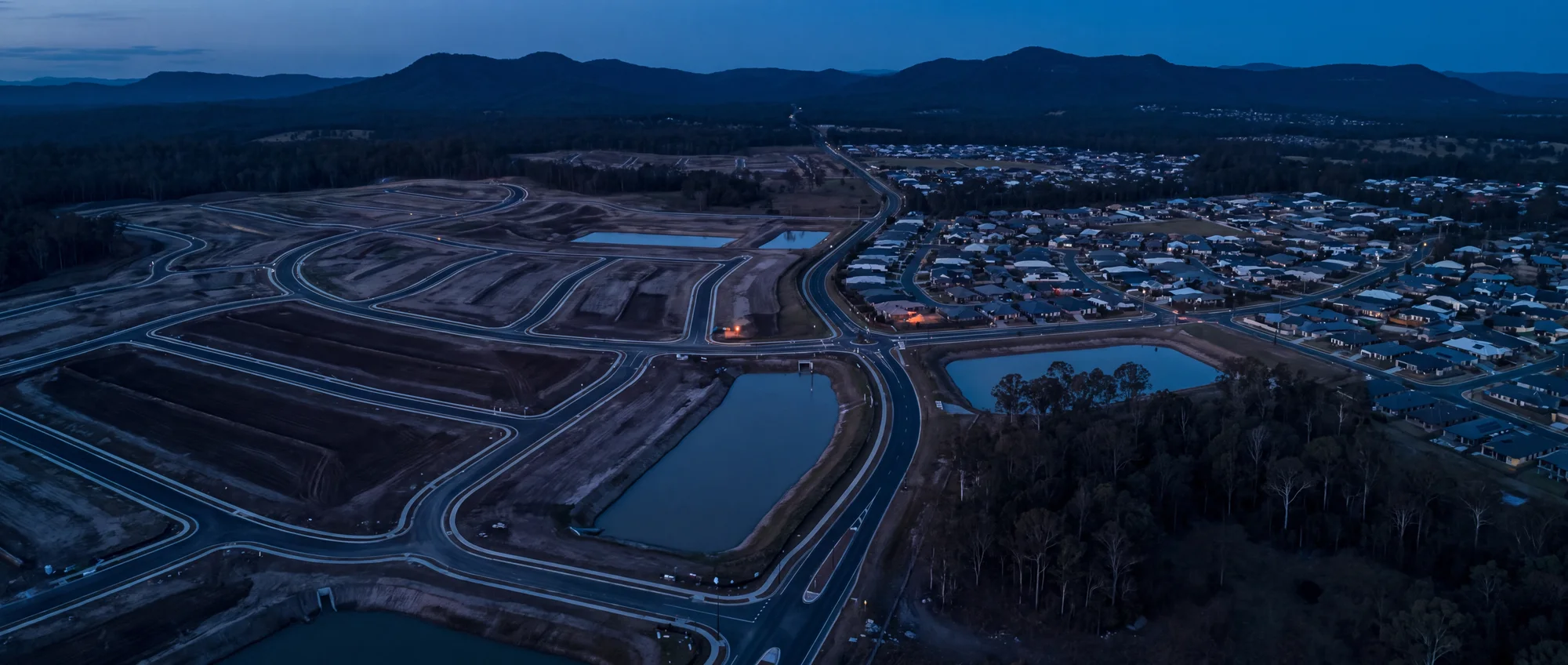
Queensland is unlocking land and fast-tracking planning approvals, but approvals do not deliver homes by themselves. Every project must still work through hundreds of complex conditions, managed today in spreadsheets and email across developers, consultants and assessing authorities, and often resolved retrospectively at the end of the build, when projects are at peak debt and every delay adds holding cost.
Condition compliance is a regulatory staple and a commercial necessity: construction, practical completion, plan sealing, title creation and settlement do not happen until conditions are discharged. Managed as isolated pockets of activity, the process is slow, inefficient and vulnerable to avoidable cost blowouts, and government cannot see any of it.
How PlanEase fixes it
PlanEase turns those conditions into one shared, structured delivery process. It extracts conditions verbatim from the decision notice, tracks evidence and responsibility across the project team, and gives the approving authority a live view of compliance status. AI accelerates the work, drafting, classifying and organising, while every judgement stays with Queensland's planning and surveying professionals.
The result: better quality compliance work for industry, real-time delivery visibility for government, and approved development reaching construction, plan sealing and title sooner. PlanEase is in commercial use today by around 20 Queensland firms, including national consultancies.

2.0 Who we are
The people behind the platform.
PlanEase is founder-built and founder-run: a surveyor and a planner with more than 30 years of combined experience, building the platform for the work they still do every day.

Ben Dawes
Co-founder · Digital engineer and registered surveyor
Ben is the Geospatial Council of Australia's Future Leader of the Year (2024) and National Digital Engineering Manager for a tier one civil and infrastructure company. He has spent more than 15 years delivering systems integration and data management on major Queensland development and infrastructure projects.

Waimana Kingi
Co-founder · Director of Project Delivery, Therefor Group
Waimana leads project delivery at Therefor Group, formerly Wolter Consulting Group, one of Queensland's most established planning and development consultancies, steering complex projects through approval and into delivery across South East Queensland.
3.0 Capability
What the platform does, in brief. The full specification is the Technical and Functional Overview.
Council record collection
PlanEase collects the application record and documents from the council's public portal and keeps them in sync automatically.
Condition extraction
Council-specific parsing, built for Queensland councils and EDQ processes, reads the decision notice and extracts every condition with its number, wording, headings and timing trigger.
Condition register
Every condition is a live record with status, timing, assignee and history, worked through table, board and Gantt views.
Documents and evidence
Documents are versioned, previewed, compared side by side, and linked to the conditions they discharge.
Lodgement
Lodgement packages assemble selected conditions and their evidence into a condition-by-condition submission report and bundled document set.
EDQ compliance record
For PDA projects, PlanEase structures the condition-by-condition compliance record that supports the EDQ plan sealing request.
Integrated AI
A tenanted AI assistant, enabled per project, drafts submission statements and runs lodgement readiness checks.
Reporting and oversight
Every project presents the same structured status across the portfolio, with cross-project search and a per-project audit trail.
Two-point quality authorisation
Evidence is confirmed by the responsible consultant and verified by the project coordinator before a condition becomes submission-ready. Only the assessing authority determines that a condition is satisfied.
Assessing authority view
A live view of compliance status for assessing officers, read-only and with no change to statutory workflow, with early pilots underway with South East Queensland authorities.
The full specification, stated as numbered clauses, is the Technical and Functional Overview.
4.0 Architecture
How the platform is put together, in one figure.
Figure 1
A browser connects over HTTPS to web delivery. Every request then passes through a full-height auth and security layer before reaching a serverless API that reads and writes the application, document and relational data stores. Everything except the browser sits inside the AWS Sydney region boundary.
5.0 Deployment
What it takes to adopt the platform.
Deployment effort is measured in days, not months.
- Browser-based SaaS, nothing to install
- No integration with government systems required to start
- Microsoft single sign-on for government users
- Guided intake: a project is established in minutes from the decision notice
- In-platform guides, help.planease.net and in-app support
- Public status page and uptime monitoring (status.planease.net)
6.0 Security and data sovereignty
The controls the platform operates under today, and where client data lives.
- Essential Eight aligned
- ISO 27001 aligned controls
- AWS services IRAP-assessed (PROTECTED)
- Validated 4-hour recovery objective
- OAIC-aligned incident response
- Independent security expertise
When PlanEase works with a Queensland council or state authority, its records are handled under the Information Privacy Act 2009 (Qld) and the Australian Privacy Principles.
Data sovereignty
Figure 2
An outline of Australia with a single marked location on the east coast at Sydney, labelled AWS Sydney region. The marker indicates where client data is stored and processed.
7.0 Scheduled milestones
Independent assurance ahead, as scheduled milestones.
January 2027
First formal penetration test
Annual thereafter.
Within 6 months
WCAG 2.1 AA independent audit
Leading to a published conformance statement.
Within 12 months of formal government engagement
ISO 27001 certification
Roadmap documented and available on request.
8.0 Data ownership
Who owns the data, how it leaves the platform, and what happens at contract end.
Clients own all data
Nothing in the platform changes who owns a record, a document or a decision. PlanEase holds client data to operate the service.
Export in open formats at any time
Condition registers, documents and reports leave the platform in open formats throughout the engagement, not only at its end.
Authority stays with government
Only the assessing authority determines that a condition is satisfied. Every update is permission-controlled and recorded in an audit history.
At contract end
30 days
Archive
Data is frozen on offboarding and held in archive.
90 days
Removal
Client data is removed from production systems.
12 months
Recoverable store
A recoverable copy is retained, then deleted. Deleted earlier on written request.
These terms are governed by the data retention policy and the data processing agreement, both available on request.
9.0 Documents and contact
Documentation available on request, supporting references, and how to reach PlanEase.
Available on request
- Data processing agreement
- Incident response plan
- Data retention policy
- Sub-processor register
- Essential Eight self-assessment
- ISO 27001 roadmap
- SLA and support commitment
- Tenant isolation statement
Supporting information