Priority Development Area · Caloundra South (Aura)
Caloundra South (Aura) PDA: Development Conditions and Plan Sealing
Caloundra South, marketed as Aura, is one of the largest masterplanned communities on the Sunshine Coast, and its approvals are decided by the state, not by Sunshine Coast Council.
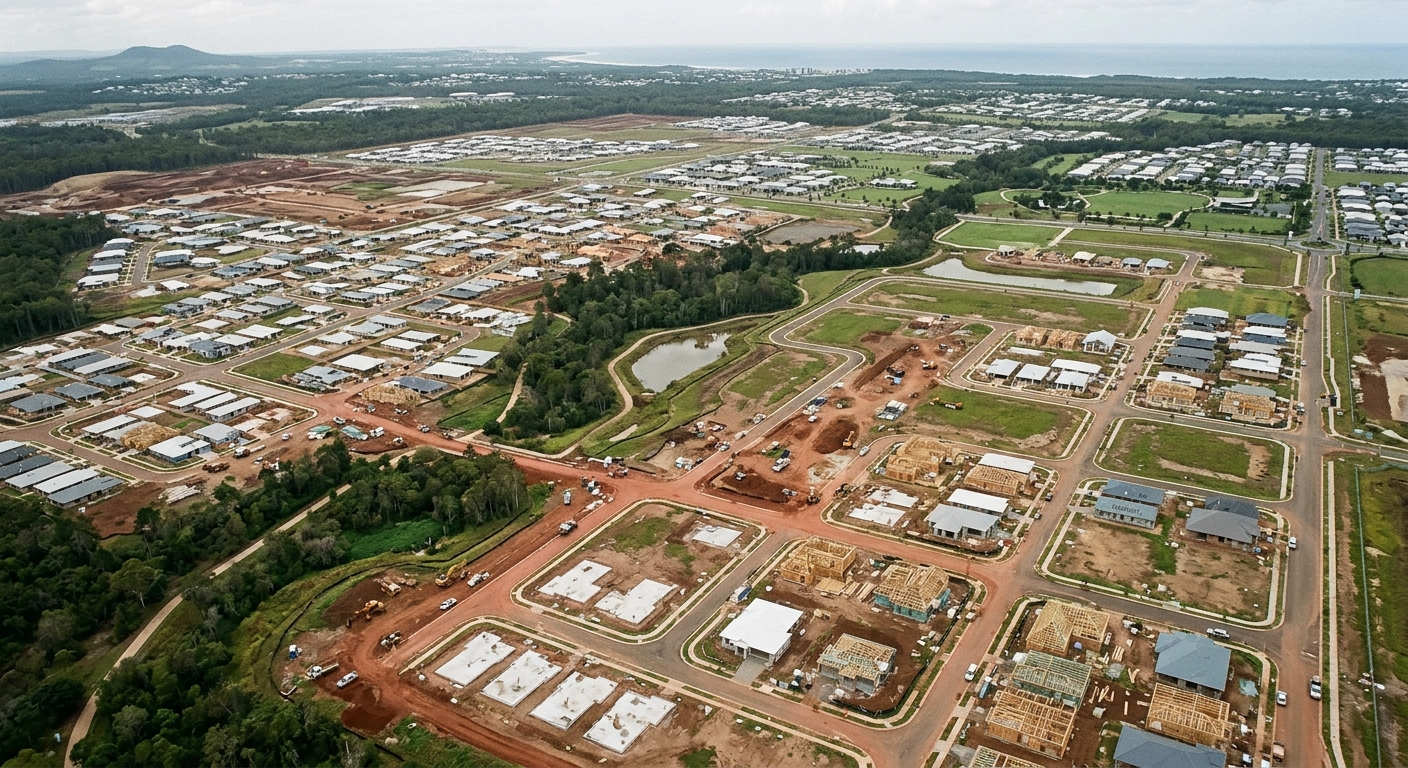
Caloundra South, delivered as Aura, is a declared Priority Development Area (PDA), which places its development approvals on a different statutory track to the rest of the Sunshine Coast. Development applications in the Caloundra South PDA are assessed and decided under the Economic Development Act 2012, not the Planning Act 2016 that governs standard Sunshine Coast Council development. Economic Development Queensland (EDQ) is responsible for assessing all development applications within the PDA, and each application is assessed against the area's Development Scheme rather than the Sunshine Coast Planning Scheme.
Caloundra South was first declared an urban development area in 2010 and continued as a Priority Development Area under the Economic Development Act 2012 when the Urban Land Development Authority transitioned to Economic Development Queensland in February 2013. The PDA covers roughly 2,300 hectares south of the existing Caloundra urban area. For developers and surveyors, the practical consequence is that both the condition schedule and the plan sealing pathway sit inside the PDA framework administered by EDQ.
Managing PDA conditions from approval through to an approved plan of subdivision is what keeps a Caloundra South project moving toward registration on time. For the broader picture, see plan sealing in Priority Development Areas and how it differs from standard council plan sealing.
How Caloundra South PDA approvals are structured
In the Caloundra South PDA, development approvals are issued under the Economic Development Act 2012, with conditions drawn from the PDA Development Scheme. The Minister for Economic Development Queensland (MEDQ) holds the power to assess and decide PDA development applications, and Economic Development Queensland is the assessing body for Caloundra South. Assessment is handled by EDQ rather than delegated to Sunshine Coast Council, so applications and conditions flow through the state process.
Development charges in the Caloundra South PDA are set by the area's Development Charges and Offset Plan, which accompanies the Development Scheme, rather than by Sunshine Coast Council's adopted infrastructure charges resolution. The charges plan identifies the trunk infrastructure required to service the PDA and how charges are calculated, levied, and offset against developer-delivered works.
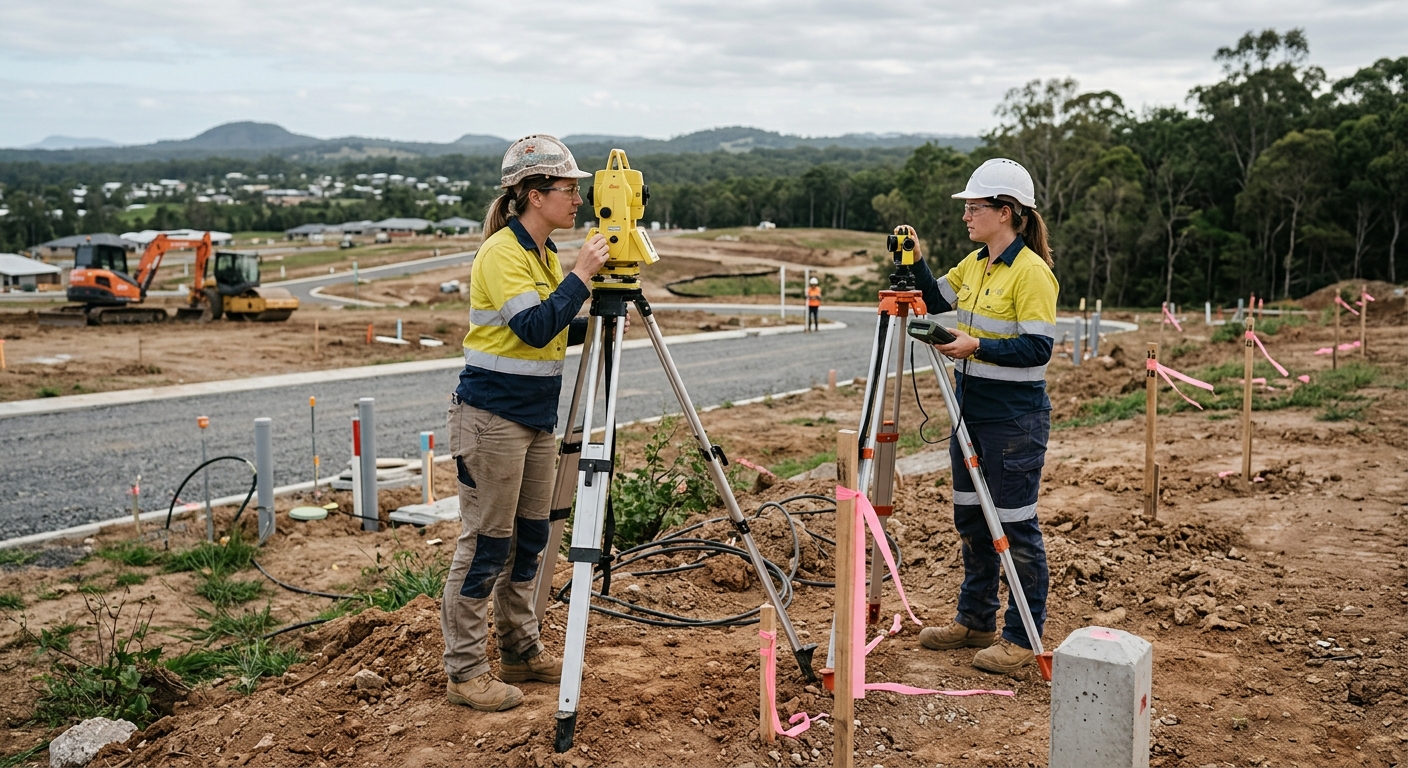
Because Aura is delivered over many precincts and many years, conditions frequently reference precinct-level and staging requirements. Operational works for roads, stormwater, and parks must be designed, approved, constructed, and certified, and that certification feeds directly into the plan of subdivision approval. Tracking which conditions attach to which precinct and stage is central to running a project on a growth front this large.
Where Caloundra South PDA projects run into problems
The most common delay is treating the PDA process as if it were standard council plan sealing. The evidence required to close out PDA conditions and secure a plan of subdivision approval is specific to the Development Scheme and the charges plan, and teams that assume a Planning Act workflow lose time reworking submissions. According to Economic Development Queensland, the statutory period to decide a PDA development application is 40 business days, so lodging complete information up front is what keeps the assessment on track.
The scale and precinct structure of Aura are a second pressure point. Consultant teams often run several precincts and stages at once, and conditions that apply across stages can create confusion about what is required at each individual lodgement. Without clear tracking of which conditions apply to which stage, the plan of subdivision application for a stage can be incomplete.
Operational works certification is the third recurring issue. If certification that works were completed to the approved design is not obtained at practical completion, it becomes an outstanding item that holds up the plan of subdivision approval, and on a multi-stage project that gap can repeat stage after stage.
Time savings from structured condition management
Caloundra South projects that map every PDA condition to a responsible party and a piece of evidence at the point of approval consistently avoid the scramble at plan sealing. The processes involved, from charge reconciliation to operational works certification, are known in advance. The time saving comes from starting them early enough to complete them without urgency, and from lodging a plan of subdivision application that is complete on first submission.
A complete first submission is the single biggest lever. Applications with outstanding matters generate information requests that add weeks; applications that are complete on lodgement proceed on the statutory timeframe. Building operational works certification milestones into the construction programme, rather than leaving them to plan sealing preparation, removes the most common last-minute blocker across precincts and stages.
Risk reduction for Caloundra South developments
Caloundra South projects carry the same settlement risk as any large Queensland subdivision: unconditional contracts, drawn finance facilities, and purchasers with fixed timelines. The specific risk in a PDA is that the condition schedule and plan of subdivision pathway sit under a statute many project teams touch less often than the Planning Act, combined with the volume of concurrent precincts on a growth front this size. That combination makes informal, memory-based tracking particularly risky.
A structured condition register that makes the full compliance position visible, and keeps it current as precincts and stages progress, is the most reliable way to manage that risk. See EDQ development approvals and conditions for how PDA conditions differ from council conditions in practice, and managing DA conditions across a project for the underlying discipline.
Practical approach to Caloundra South PDA conditions
Read the full PDA condition schedule against the Development Scheme and charges plan at the point of approval, and identify the conditions with the longest lead times first: operational works, trunk infrastructure delivery, and any charge or offset reconciliation. On a precinct-based project of this scale, confirm how conditions map across precincts and stages so that each plan of subdivision application is complete on its own terms.
PlanEase supports structured condition management for Caloundra South PDA projects: tracking conditions from approval, assigning responsibility, and building the compliance record progressively toward an approved plan of subdivision. For context on how the Sunshine Coast handles its standard, non-PDA development, see the Sunshine Coast Council DA conditions page.
Frequently asked questions
Who approves development in the Caloundra South (Aura) PDA?
Development in the Caloundra South Priority Development Area is approved under the Economic Development Act 2012, not the Planning Act 2016. Economic Development Queensland is responsible for assessing all development applications within the PDA, and applications are assessed against the Caloundra South PDA Development Scheme. This is separate from Sunshine Coast Council's standard development approval process.
Is Caloundra South the same as Aura?
Aura is the name under which the Caloundra South Priority Development Area is being developed and marketed. Caloundra South is the formal PDA name used in the statutory framework, while Aura is the masterplanned community delivered within it. Both refer to the same declared PDA on the Sunshine Coast, assessed by Economic Development Queensland against the PDA Development Scheme.
How long does a Caloundra South PDA development application take to decide?
Economic Development Queensland states that the statutory period to decide a PDA development application is 40 business days. That period assumes a properly made application with the required information; incomplete applications attract information requests that extend the real timeline. Lodging a complete application is the most reliable way to keep to the statutory period.
How does plan sealing work in the Caloundra South PDA?
Inside a PDA, the equivalent of council plan sealing is the approval of a plan of subdivision under the Economic Development Act 2012. Relevant development conditions and operational works certification must be satisfied before the plan of subdivision is approved. The process and evidence differ from standard council plan sealing, which is covered in more detail on the plan sealing in Priority Development Areas page.
Caloundra South (Aura) PDA conditions sit under the Economic Development Act 2012, assessed by Economic Development Queensland against a PDA Development Scheme rather than the Sunshine Coast Planning Scheme. Given the scale and precinct structure of the area, projects that track conditions from approval and secure operational works certification progressively arrive at the plan of subdivision stage ready to lodge a complete application and move to registration without avoidable delay.
Learn more about PlanEase
Structured DA condition management for Caloundra South (Aura) PDA subdivision projects.
See how PlanEase works →