Policy · Analysis · South East Queensland
The SEQ Digital Plan and the Last Mile of Housing Delivery
South East Queensland just got its first digital plan. It's right to target faster approvals, but the homes-sooner promise is won or lost after the approval is granted.
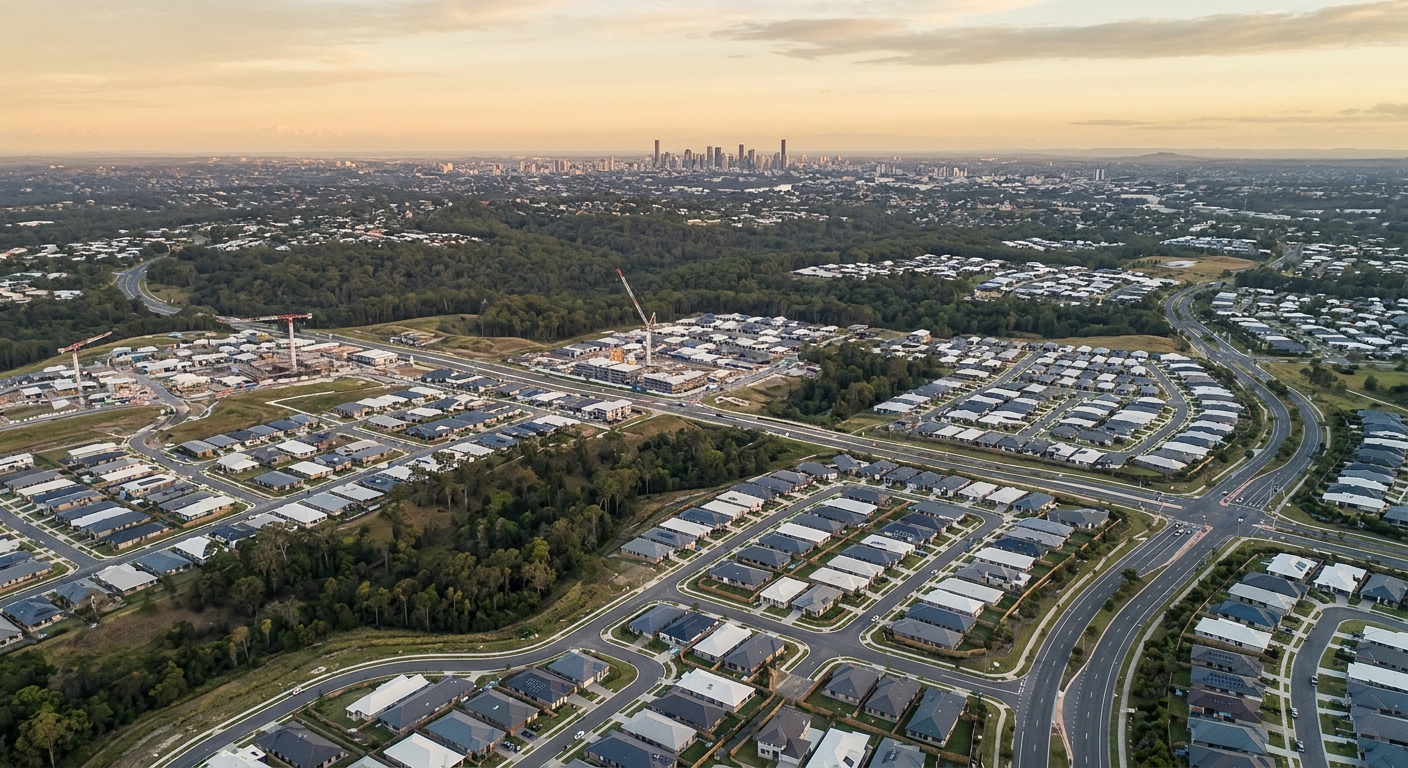
In April 2026 the Council of Mayors (SEQ) released South East Queensland's first digital plan, a ten-year roadmap, backed by the SEQ City Deal, to make regional planning, development assessment and housing delivery faster and more data-driven across all 12 councils. It is, as the planning profession has noted, one of the most consequential planning documents the region has seen in years. It is also, for anyone who actually delivers land, only half the story.
Sources: Council of Mayors (SEQ), SEQ Digital Plan (April 2026); Queensland Government, ShapingSEQ 2023.
What the SEQ Digital Plan actually is
The plan is an initiative of the SEQ City Deal, the partnership between the Australian Government, the Queensland Government and the Council of Mayors (SEQ). It sets a ten-year approach to investing in the digital tools, data and connectivity that the region needs to keep pace with growth, and it was written in direct response to a 2025 benchmarking study that found South East Queensland is around 23% less productive than comparable global regions and carries below-average internet performance.
Beneath the headline ambitions, the plan rests on a small number of foundations. The one that matters most for the development industry is a regional common data environment (a single, shared source of truth for land, housing and infrastructure data across all 12 councils) sitting alongside a region-wide digital identity, coordinated investment in connectivity, and the implementation machinery to make regional decisions land consistently inside each council.
The part developers should care about
The plan is explicit that digital tools should be pointed at approvals. Councils have signalled an intent to digitise property approval processes and to build AI-supported compliance checking and data analysis into development assessment systems to accelerate application processing and improve customer service. Read against the national planning-reform agenda (streamlined pathways, accelerated approvals) it is South East Queensland's digital answer to "cut the red tape at the front door."
That is worth having. But it aims at a stage that is already, on the evidence, not the slow one. PlanEase's own analysis of South East Queensland council development-application registers shows the assessment decision typically lands in around a month: the approval is rarely where a project loses its year. You can see the live figures on our SEQ development application data page.
A faster front door does little for housing supply if the hallway behind it is still blocked.
Where the plan is quieter: the post-approval last mile
Once an approval is granted, the work that actually produces a settled lot begins: development approval conditions have to be satisfied, operational works designed, built and certified, infrastructure charges paid, external authority sign-offs obtained, and only then can the survey plan be sealed and titles registered. This is the stage where months (sometimes years) accumulate, and it is the stage the SEQ Digital Plan touches only lightly, through better infrastructure and land-use data rather than through the condition-and-certification pipeline itself.
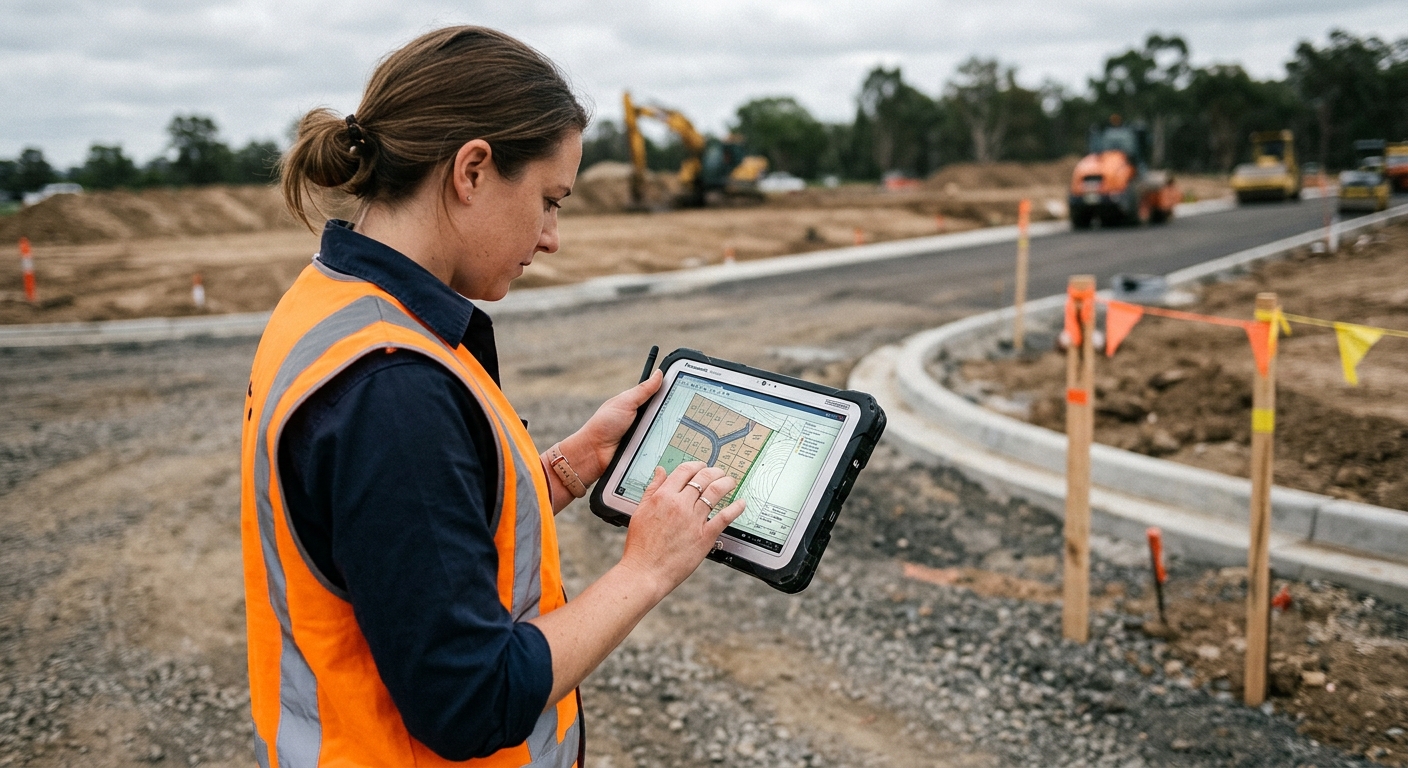
A common data environment is exactly the right idea: it just can't stop at the approval. The conditions attached to a development approval are known the moment it is issued; the evidence each one needs is largely predictable; the parties responsible are established at the start. A genuinely regional "single source of truth" that carried condition status, certification evidence and plan-sealing readiness would do as much for supply as any assessment speed-up, because it would attack the delay where the delay actually is.
What a digital delivery pipeline looks like
The same discipline the SEQ Digital Plan applies to assessment (shared data, clear pathways, accountability) applied to the months after approval, looks like this: every condition broken out and assigned an owner, linked to the stage it applies to, and backed by the evidence that satisfies it as that evidence is produced; long-lead external sign-offs actioned early instead of discovered late; and a plan sealing submission that is a collation of an already-complete record rather than an end-of-project scramble.
That is the gap PlanEase was built to close, and it is why we read the SEQ Digital Plan as a genuinely good start rather than the finish. For the fuller argument on why approved lots stall on the way to settlement, see the approval is the start, not the finish.
Frequently asked questions
What is the SEQ Digital Plan?
The SEQ Digital Plan is South East Queensland's first regional digital plan, released by the Council of Mayors (SEQ) in April 2026 under the SEQ City Deal. It is a ten-year roadmap for investing in data, connectivity and digital tools (including a regional common data environment and digital identity) to make planning, development assessment and housing delivery faster and more coordinated across all 12 SEQ councils.
How will the SEQ Digital Plan affect development approvals?
The plan signals a move to digitise property approval processes and to build AI-supported compliance checking and data analytics into council development-assessment systems, with the goal of accelerating application processing and cutting red tape. In practice that should mean more consistent, more automated assessment workflows across councils, underpinned by shared regional data.
Does the SEQ Digital Plan speed up housing delivery?
It is aimed at supporting faster housing delivery, primarily by speeding up assessment and improving infrastructure and land-use data. But delivery also depends on the post-approval stage (satisfying conditions, certifying operational works, sealing the plan and registering titles) which the plan addresses less directly. Faster approvals help, but the largest delays typically sit after the decision, in condition compliance and plan sealing.
What is a common data environment in planning?
A common data environment (CDE) is a single, shared source of truth for a project or region's information. In the SEQ Digital Plan it means consistent land, housing and infrastructure data shared across the 12 councils, so planning, assessment and infrastructure decisions draw on the same reliable inputs. Its value grows if it extends beyond assessment into the delivery pipeline: condition status, certification evidence and plan-sealing readiness.
South East Queensland needs roughly 38,000 homes a year to meet its own targets. The SEQ Digital Plan is a serious, welcome step towards a faster, more data-driven planning system, and the region will get the most out of it by carrying that same digital discipline past the approval, into the last mile where homes are actually delivered.
Manage the post-approval last mile with PlanEase
PlanEase turns a development approval's conditions into a live, shared register through to plan sealing, so approved lots reach settlement with fewer delays and less risk.
See how PlanEase works →