Plan sealing software · Surveyors
Plan Sealing Software for Surveyors
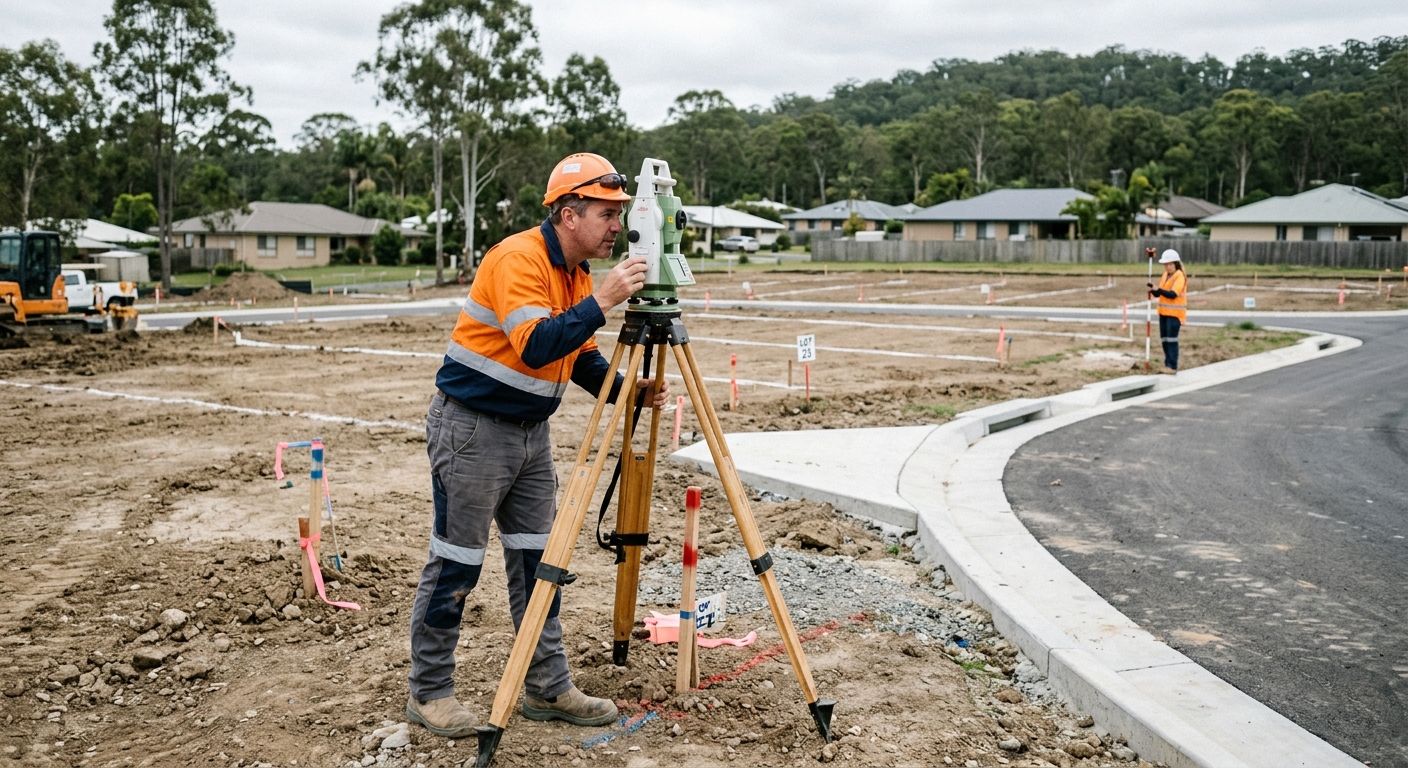
The surveyor lodges the plan sealing application, so the surveyor carries the coordination burden. Plan sealing software gives cadastral surveyors one place to track every condition, chase evidence from engineers and planners, and get a survey plan sealed without last-minute scrambling.
In a Queensland subdivision, the surveyor prepares the survey plan and lodges the plan sealing application with the local government. That single fact puts the surveyor at the centre of the plan sealing process, even though most of the evidence council wants to see is produced by other people: engineering certifications, infrastructure agreements, referral agency sign-offs, payment receipts. Plan sealing software exists to make that coordination role manageable rather than a source of stress at the end of every project.
Why the plan sealing burden lands on the surveyor
The surveyor lodges the plan, so council directs its questions to the surveyor. In Queensland, plan sealing is governed under the Planning Act 2016: before a survey plan can be registered with the Titles Registry, the local government must be satisfied that the relevant development approval conditions have been met, and it endorses the plan to confirm that. When an item is outstanding, council writes back to the lodging party, which is the surveyor, and the surveyor then has to work out who actually holds the missing piece.
That is where the coordination burden bites. The surveyor rarely holds the engineering as-constructed certification, the maintenance bond, the Unitywater or Energex confirmation, or the infrastructure charges receipt. Each of those sits with a different consultant or the developer. Without a shared record of what has been collected and what is still outstanding, the surveyor spends the run-up to lodgement sending emails and reconciling replies against a condition schedule that lives in a PDF.
The deadlines are real, too. Under the Planning Act 2016, the default currency period for a reconfiguring a lot approval is four years to give the plan to the local government for approval, unless the approval states a different period. Once council has approved the plan, the Land Title Act 1994 requires it to be lodged for registration within six months of that approval. A survey practice juggling several projects needs to see those clocks clearly, not discover them late.
What plan sealing software needs to do for a surveyor
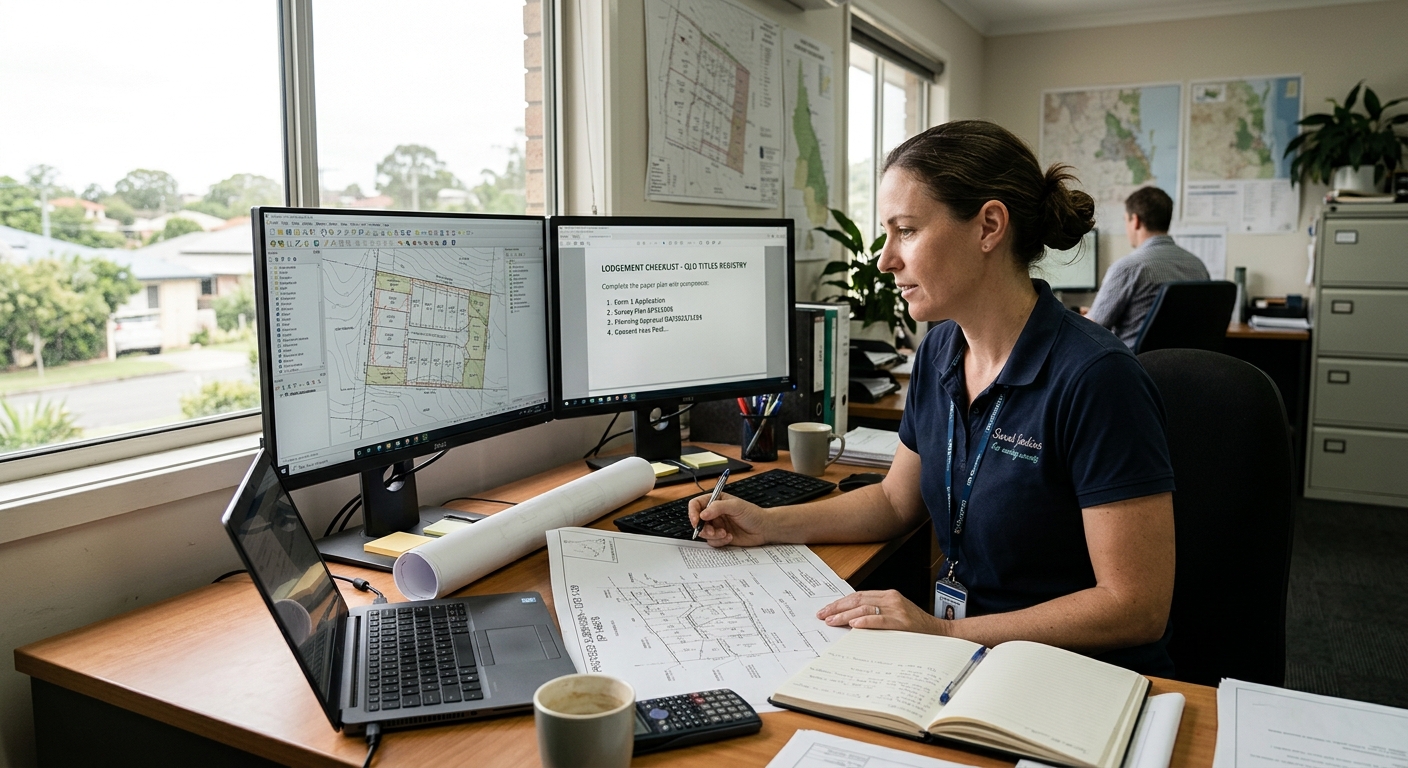
Good plan sealing software mirrors how a survey practice actually works: it turns the condition schedule into a live checklist and makes the status of every item visible. For a surveyor coordinating other consultants, the features that matter most are practical, not decorative.
- Extract and structure conditions from the approval so nothing is buried in the PDF
- Assign each condition to the consultant or party who owns the evidence
- Attach certifications, receipts, and sign-offs directly to the condition they satisfy
- Show at a glance what is outstanding before the sealing application is lodged
- Keep the record current across multiple concurrent projects and stages
Time saved on every lodgement
The time saving for a surveyor comes from removing the reconstruction step. When compliance evidence is collected against each condition as it is produced, the plan sealing application is a straightforward collation rather than a fortnight of chasing. Complete applications also move through council on the standard timeframe; incomplete ones generate information requests that add weeks and pull the surveyor back into correspondence long after the plan was drafted.
Across a book of work, that difference compounds. A practice that treats plan sealing as a running process rather than an end-of-project event spends less time on rework and hits lodgement dates it can actually commit to. See plan sealing software for development approvals for how the same structured record supports the wider project team.
Risk reduced for the lodging surveyor
Because the surveyor lodges the plan, the surveyor is exposed to the consequences when a condition is missed. A plan sealing application that council refuses because an item is outstanding delays registration, and registration is what settlement usually depends on. The reputational risk of a stalled plan sits with whoever lodged it.
A structured condition register reduces that exposure by making the compliance position explicit and shared. When every party can see which conditions are done, which are outstanding, and who is responsible, the surveyor is no longer the single point of memory for the whole project. See plan sealing for surveyors and planners for more on how the coordination roles divide across a project team.
How PlanEase fits a survey practice
PlanEase is built for exactly this workflow. It gives the lodging surveyor a structured record of every condition, its status, who is responsible, and the evidence attached to it, from the day the approval is issued through to plan registration. Rather than reconstructing compliance from email threads at lodgement, the surveyor assembles the sealing application from a record that is already complete and verified.
For practices running several subdivisions at once, the platform keeps each project's condition schedule current and visible, so lodgement dates are based on the real state of the evidence, not an optimistic guess. See also managing DA conditions across a project.
Frequently asked questions
Who lodges the plan sealing application in Queensland?
The surveyor typically prepares the survey plan and lodges the plan sealing application with the local government. Because the surveyor is the lodging party, council directs its requests and any requests for further information back to the surveyor, which is why the coordination burden tends to sit with the survey practice.
What does plan sealing software actually do for a surveyor?
Plan sealing software turns the approval condition schedule into a live checklist, assigns each condition to the party who holds the evidence, and stores certifications, sign-offs, and receipts against the condition they satisfy. That gives the surveyor a clear view of what is outstanding before lodgement, rather than reconstructing compliance from emails at the end.
How long does a surveyor have to lodge a sealed plan for registration?
Under the Land Title Act 1994, a plan of subdivision approved under the Planning Act must be lodged for registration within six months of that approval. Separately, the Planning Act 2016 sets a default currency period of four years for a reconfiguring a lot approval to give the plan to the local government, unless the approval states otherwise. Tracking both clocks matters on staged projects.
Can plan sealing software replace the survey work itself?
No. Plan sealing software does not draft the survey plan or perform the survey. It manages the condition compliance and document coordination that surround the plan, so that when the survey work is done the lodgement is not held up by missing evidence from other consultants.
Plan sealing is a coordination problem before it is a lodgement problem, and the surveyor sits at the centre of it. Software that keeps the condition schedule live, assigns ownership, and collects evidence progressively lets a survey practice lodge complete applications on time and carry less risk on every project.
Learn more about PlanEase
Plan sealing and DA condition tracking built for Queensland surveyors.
See how PlanEase works →