DA conditions · Ipswich
Ipswich City Council DA Conditions: Plan Sealing and Approval Management
Ipswich City Council oversees some of the fastest-growing areas in Australia.
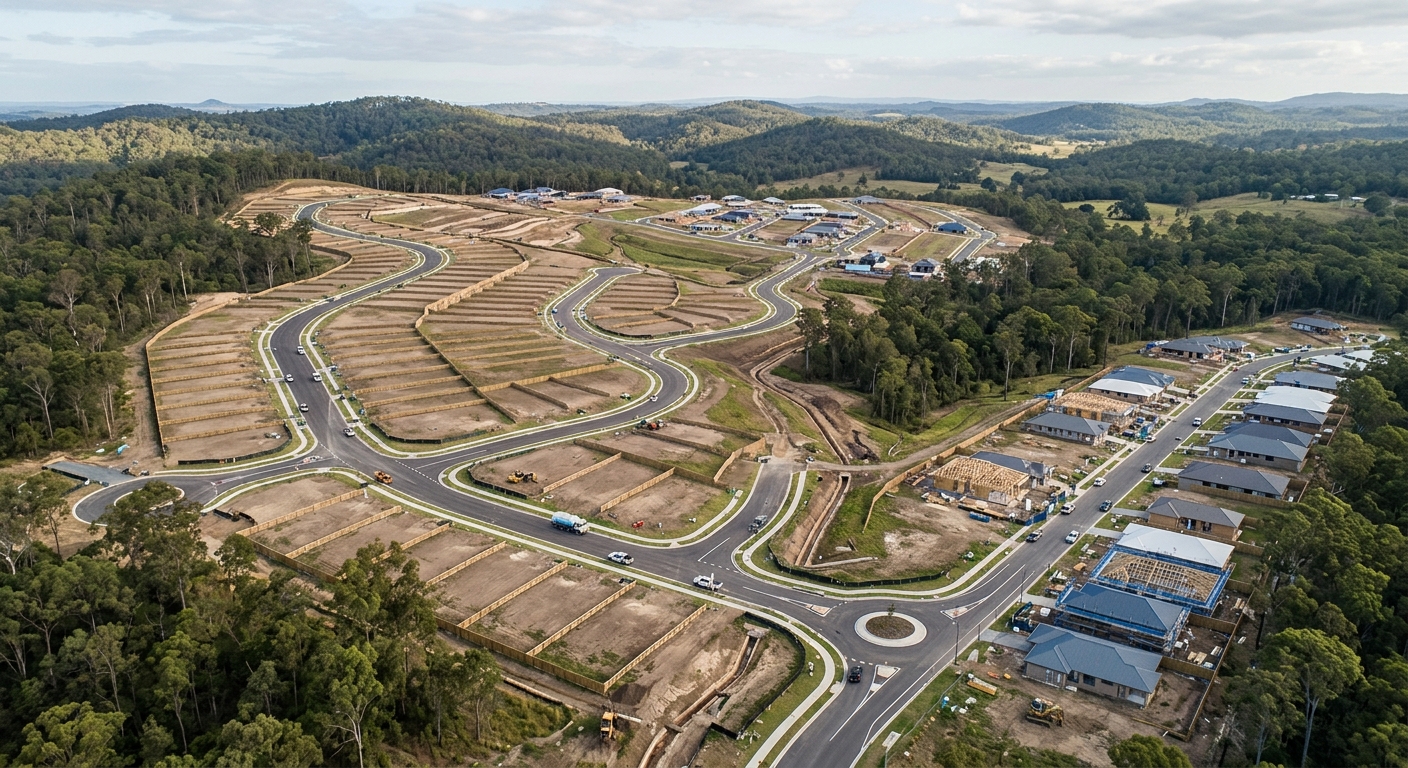
Springfield Lakes, Ripley Valley, and Redbank Plains are among the most active residential development corridors in South East Queensland, and among the fastest-growing areas in the country. Subdivision projects in these areas carry DA conditions that reflect the scale of infrastructure investment required to service them.
Under the Ipswich Planning Scheme, development approvals for subdivision include conditions from the assessment manager and referral agencies. Given Ipswich's growth trajectory, infrastructure conditions (covering roads, stormwater, parks, and utility connections) are typically detailed and require active management across the project lifecycle.
Managing these conditions from approval to plan sealing is what separates projects that settle on time from those that don't.
How Ipswich DA conditions are structured
Ipswich City Council development approvals include assessment manager conditions and, where applicable, referral agency conditions from Unitywater, Energex, and the Department of Transport and Main Roads. For projects near state-controlled roads, which is common in Ipswich's growth corridors, TMR conditions on access, sightlines, and road works can add complexity to the condition schedule.
Infrastructure charges in Ipswich are calculated under the Ipswich Adopted Infrastructure Charges Resolution. Given the scale of development in Ipswich's growth areas, charges per lot can be significant. Staged projects need to track charge obligations across multiple lodgements.
Ipswich projects in growth precincts often operate within master planned area frameworks: Springfield and Ripley Valley both have specific planning provisions. Conditions on projects in these areas may reference precinct-level requirements in addition to the standard planning scheme codes.
Larger Ipswich subdivision projects may require operational works approvals in addition to the reconfiguration approval. Conditions from the operational works approval feed into the plan sealing process. Compliance with operational works conditions must be demonstrated alongside the reconfiguration conditions.
Where Ipswich projects run into problems
TMR conditions are a specific pressure point on Ipswich projects near state-controlled roads. The Department of Transport and Main Roads has its own assessment process, and obtaining written confirmation of compliance with TMR conditions can involve multiple rounds of correspondence. Starting this process late in the project is a reliable source of delay.
Ipswich's rapid growth means that consultant teams are stretched across multiple concurrent projects. Engineers, planners, and surveyors working on several Ipswich projects simultaneously may not have the bandwidth to actively track every condition across every project. Without a structured shared record, conditions are addressed reactively rather than proactively.
Operational works conditions (particularly those relating to stormwater infrastructure, road construction, and park works) require formal certification that the works have been completed to the approved design. If this certification isn't obtained at practical completion, it becomes an outstanding item at plan sealing.
On multi-stage Ipswich projects, conditions that apply across stages can create confusion about what's required at each individual lodgement. Without clear tracking of which conditions apply to which stage, the plan sealing application for each stage may be incomplete.
Time savings from structured condition management
Ipswich projects that identify TMR and Unitywater conditions early and manage them as active workstreams consistently avoid the delays that arise when these conditions are left to the plan sealing preparation phase. The processes involved are known. The time saving comes from starting them early enough to complete them without urgency.
For operational works conditions, building certification milestones into the construction programme, and obtaining certification at practical completion rather than at plan sealing preparation, removes a consistent source of last-minute friction.
Ipswich City Council plan sealing applications that are complete on lodgement proceed on the statutory timeframe. Applications with outstanding matters generate requests that add weeks. The time saving from a complete first submission is direct and reliable.
Risk reduction for Ipswich development projects
Ipswich's growth area projects carry the same settlement risk as any major SEQ subdivision. Unconditional contracts, finance facilities drawn, purchasers with fixed plans: the financial exposure from settlement delays is real and measurable.
The specific risk in Ipswich projects comes from the complexity of the condition schedule (multiple referral agencies, operational works conditions, precinct-level requirements) combined with the volume of concurrent projects in the area. This combination makes informal condition management particularly risky.
A structured condition register that makes the full compliance position visible, and keeps it current as the project progresses, is the most reliable way to manage this risk. See loss of compliance knowledge over long projects for more on the risks that accumulate on complex, multi-year developments.
Practical approach to Ipswich condition management
Review the full Ipswich DA condition schedule at approval, with particular attention to TMR, Unitywater, and operational works conditions. These require the most lead time and should be actioned first.
On precinct-based projects in Springfield or Ripley Valley, confirm whether any precinct-level requirements apply in addition to standard scheme conditions. These can include specific infrastructure obligations or design requirements that aren't immediately obvious from the condition schedule alone.
PlanEase supports structured condition management for Ipswich City Council projects: tracking conditions from approval, assigning responsibility, and building the compliance record progressively. See also managing DA conditions across a project and why plan sealing breaks down at the end.
Frequently asked questions
What are the major growth areas for subdivision in Ipswich?
Ipswich's major growth corridors include the Ripley Valley Priority Development Area, Springfield (including Springfield Lakes and Spring Mountain), Redbank Plains, and areas around Walloon and Rosewood. Each has its own infrastructure planning context and, in some cases, specific planning provisions that shape DA conditions.
What role does the Department of Transport and Main Roads play in Ipswich DAs?
TMR is a referral agency for development applications affecting state-controlled roads or transport infrastructure. In Ipswich, where major arterials and highway connections run through growth areas, TMR conditions are common on subdivision approvals. These conditions can cover road dedications, access arrangements, noise attenuation, and works on or near state roads. Obtaining TMR's written sign-off requires engagement with the department's own processes and timeline.
How do operational works approvals interact with plan sealing in Ipswich?
Many Ipswich subdivision projects require a separate operational works approval for infrastructure works: roads, drainage, parks. The operational works approval has its own condition schedule. Compliance with operational works conditions, including certification that works have been completed to the approved design, must be demonstrated as part of the plan sealing process. Tracking both the reconfiguration and operational works conditions in the same system reduces the risk of gaps between them.
Are infrastructure charges significant for Ipswich subdivision projects?
Infrastructure charges in Ipswich reflect the city's infrastructure investment programme. Charges are calculated under the Ipswich Adopted Infrastructure Charges Resolution and apply to trunk infrastructure across the city. In growth areas with significant infrastructure requirements, per-lot charges can be substantial. For staged projects, understanding the charge position for each stage and planning payments accordingly is an important part of project financial management.
Ipswich City Council DA conditions reflect the city's growth ambitions and infrastructure requirements. The complexity of the condition schedule (across multiple referral agencies and, in some cases, multiple approvals) makes structured management essential. Projects that track conditions from approval and address them progressively arrive at plan sealing in a position to lodge a complete application and proceed to registration without avoidable delays.
Learn more about PlanEase
DA condition management for Ipswich City Council subdivision projects.
See how PlanEase works →