DA conditions · Developers
Define the Requirements, Own the Project
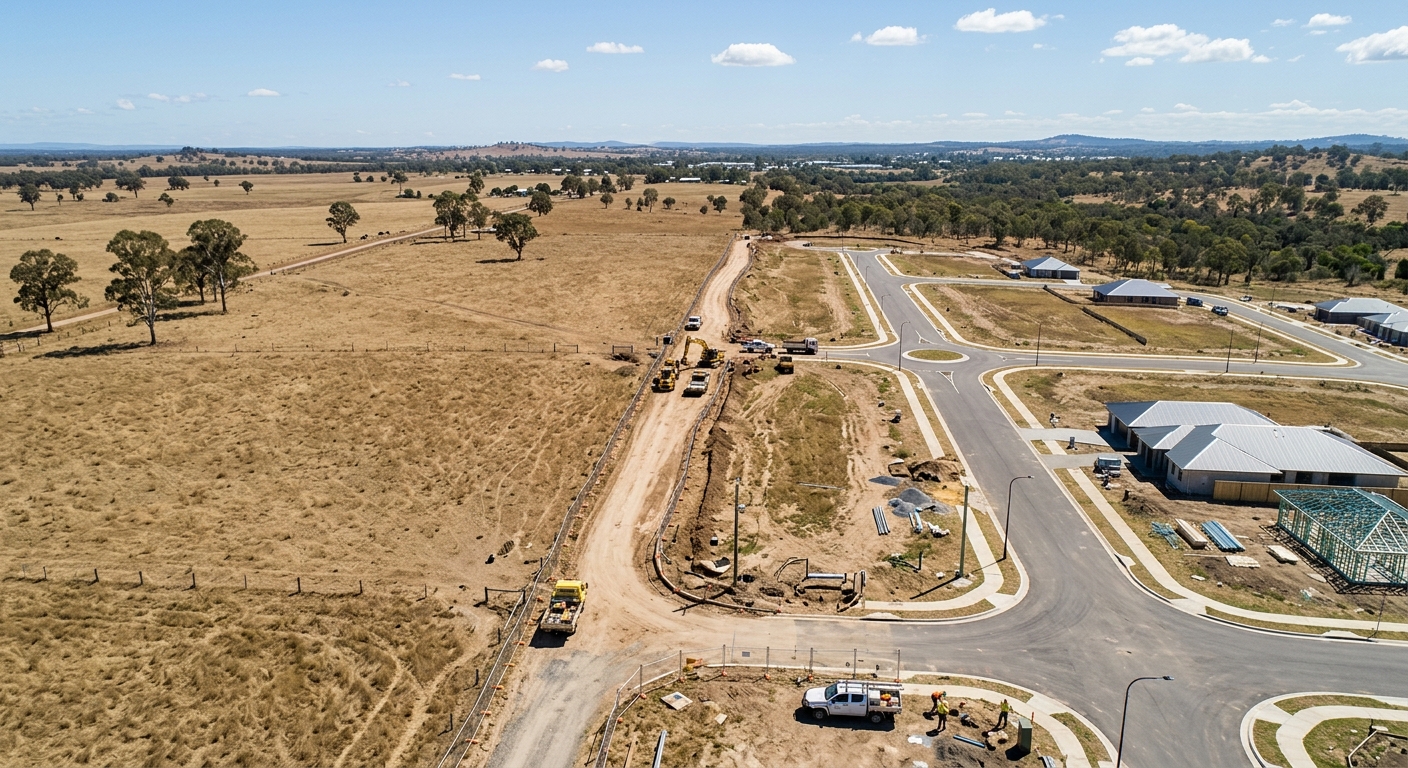
Every development approval hands you a list of conditions, but a condition on paper is not a plan of action. The developers who stay in control are the ones who break each condition into defined requirements, assign each requirement to a responsible consultant with the exact evidence it needs, and track it to completion. When you define the requirements, the consultants report into your position. When you don't, you are managed by theirs.
What DA condition requirements are
A DA condition requirement is the specific, tick-off-able task that must be completed to satisfy a single development approval condition. A condition is the obligation council imposes. A requirement is what you and your team actually have to do, and prove, to close it out. One condition often contains several requirements: a design to be accepted, works to be built, a certificate to be issued, a fee to be paid, and evidence to be lodged.
Conditions are not optional and they are not vague suggestions. Under the Planning Act 2016 (Qld), a development condition must, per section 65, be relevant to, but not an unreasonable imposition on, the development, or be reasonably required in relation to the development or the use of premises as a consequence of the development. Once imposed, they bind: section 164 of the same Act states plainly that a person must not contravene a development approval. Every condition on your schedule is a compliance obligation you carry to plan sealing.
For a Queensland developer, the practical question is not whether conditions must be met. It is who defines what "met" looks like, who is responsible, and who holds the evidence. That is where control is won or lost.
The problem: undefined requirements put consultants in charge
When condition requirements are left undefined, the developer is managed by their consultants' timelines and judgement calls. The condition schedule sits in a PDF. Each consultant reads the conditions that look like theirs, interprets them their own way, and works to their own priorities. No one holds the whole picture, and the developer, who carries the finance, the settlement dates, and the risk, is left asking for status updates rather than setting the pace.
This is a structural problem, not a personnel one. Operational works conditions are the single most common approval type moving through Queensland registers right now, and each one can generate design, construction, and certification requirements that span months and multiple parties. When those requirements are never written down and owned, they surface late, all at once, at the point of plan sealing.
PlanEase analysis of public Queensland council and Economic Development Queensland (PDA) development-application registers, 9 June to 6 September 2026, across 21 Queensland councils plus EDQ.
Approximate figures from PlanEase's analysis of public registers, data updated 16 August 2026, subject to revision. Not official statistics.
PlanEase's own analysis of those registers shows the front of the pipeline is measured: across roughly 8,280 applications, the typical decision came in about 27 days. The post-approval stage, where conditions become requirements that have to be defined, assigned, and evidenced, is where the unmeasured months hide. Operational Works was the largest single application type in that window, at roughly 13 percent of all activity, which is exactly the category that spawns the most downstream requirements.
The solution: break each condition into defined, owned requirements
The fix is to treat every condition as a small project of its own. For each condition on the schedule, the developer defines the specific requirements that must be ticked off complete before that condition can be called satisfied. This turns an ambiguous obligation ("provide water infrastructure to the standard of the relevant authority") into a defined checklist: design accepted, works constructed, certifier's sign-off obtained, connection evidence lodged.
Each requirement then gets two things: an owner and an evidence item. The owner is the responsible consultant, the engineer, surveyor, planner, or certifier who will actually do the work. The evidence item is the exact document that requirement must produce, so there is no argument later about whether it is done. When the developer defines and tracks the requirements this way, they own the compliance position and the consultants report into it.
Time saved: consultant progress visible at a glance
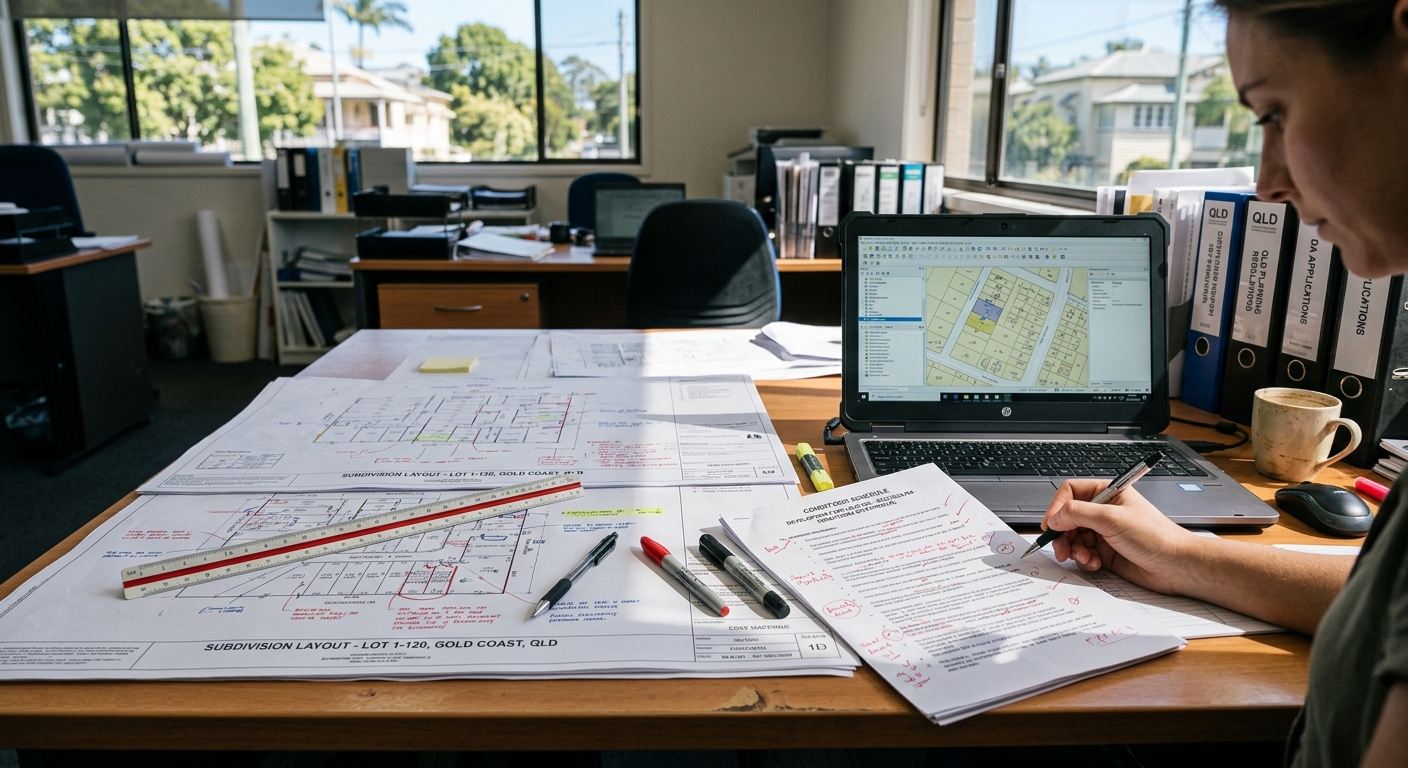
Defined requirements convert status-chasing into status-checking. Instead of emailing four consultants to reconstruct where a condition stands, the developer opens one view and sees which requirements are complete, which are in progress, and which have not been started, per owner. The coordination time that normally disappears into phone calls and follow-up emails is recovered, and it stays recovered across the life of the project rather than being spent again at every milestone.
This matters most on long, staged subdivisions where consultants and staff turn over. A defined requirement with an attached evidence item carries its own memory. A new engineer inheriting the job can see exactly what has been done and what is outstanding, rather than starting a fresh round of discovery. For more on that coordination burden, see our guides to managing DA conditions across a project and DA condition tracking for property developers.
Risk reduced: a self-evidenced pack at plan sealing
The compounding benefit is at the end. When every requirement has been closed with its evidence attached as it was generated, the plan sealing application is a collation of documented compliance, not a last-minute reconstruction. There is no gap between what council required and what you can prove, because the proof was captured against each requirement the day it was produced.
That is the difference between arriving at plan sealing with a complete, self-evidenced pack and arriving with a folder of half-remembered obligations. The first lodges cleanly and moves toward settlement. The second draws information requests, stalls, and pushes settlement dates. Because a contravened approval is an enforcement matter, not just a delay, closing every requirement with evidence is also how you keep the compliance position defensible. Developers who want the full commercial framing can read DA conditions management for property developers.
How this works in practice
In practice, owning the requirements looks like a repeatable loop applied to every condition from the day the DA is issued:
- Break the condition into requirements. Read each condition and list the discrete tasks that must be complete for it to be satisfied, including any external sign-offs with long lead times.
- Assign an owner to each requirement. Name the responsible consultant, engineer, surveyor, planner, or certifier, so accountability sits with a person, not a general "the team".
- Attach the evidence item. Define the exact document each requirement must produce, and store it against that requirement the moment it exists.
- Watch progress at a glance. Track completion per condition and per owner, so outstanding items surface early rather than at lodgement.
- Assemble the pack. Arrive at plan sealing with every requirement closed and evidenced, ready to lodge.
This maps directly to how PlanEase works. Rather than managing conditions informally across emails and spreadsheets, the platform lets a developer define the requirements under each condition, assign an owner and evidence item to each, see consultant progress in one place, and finish with a complete, verified record.
Frequently asked questions
What is the difference between a DA condition and a condition requirement?
A DA condition is the obligation council imposes in the decision notice. A condition requirement is the specific, tick-off-able task needed to satisfy it, such as a design acceptance, a certificate, a fee payment, or a piece of lodged evidence. One condition usually contains several requirements, and defining them is what turns the schedule into an actionable plan.
Why should the developer define the requirements rather than the consultants?
When requirements are undefined, each consultant interprets the conditions their own way and works to their own timeline, and the developer is left chasing status. When the developer defines and tracks the requirements, and assigns each to a named owner with the evidence it must produce, the developer owns the compliance position and the consultants report into it. It is a shift from being managed to managing.
What evidence should be attached to each requirement?
Attach the specific document that proves the requirement is complete, such as an engineering certification, an operational works completion certificate, a referral agency sign-off, a payment receipt, or a survey plan. Storing that evidence against the requirement as it is generated means the plan sealing application is a collation of documented compliance rather than a reconstruction.
Are DA conditions legally binding?
Yes. Under the Planning Act 2016 (Qld), conditions must be relevant and reasonable under section 65, and section 164 states that a person must not contravene a development approval. Every condition on your schedule is a compliance obligation, which is why tracking each requirement to a closed, evidenced state matters both commercially and legally.
How does this reduce plan sealing delays?
Most plan sealing delays come from conditions that were partially addressed or never evidenced surfacing all at once at the end. When every requirement is owned and closed with its evidence attached progressively, there is no gap between what council required and what you can prove, so the application lodges cleanly rather than drawing information requests.
Owning a subdivision is not about doing the consultants' work. It is about defining what complete looks like, holding each party to their piece, and keeping the evidence as you go. Define the requirements under every condition, assign each to an owner with its evidence item, and you arrive at plan sealing with a pack that proves itself. That is how a developer stays in control of the timeline instead of being carried by it.
Learn more about PlanEase
Define the requirements under every DA condition, assign each to the responsible consultant with the evidence it needs, and arrive at plan sealing with a complete, self-evidenced pack.
See how PlanEase works →